The Capital-Efficient Formula For
Explosive B2B SaaS Growth:
How To Predictably Turn Every $1 Spent
On Acquisition Into $10–$15 In New ARR
Battle-tested across 47 B2B SaaS companies — at budgets from $100/day to $10K/day.
The Capital-Efficient
Formula For Explosive
B2B SaaS Growth:
How To Predictably Turn Every $1 Spent On Acquisition Into $10–$15
In New ARR
Battle-tested across 47 B2B SaaS companies — at budgets from $100/day to $10K/day.
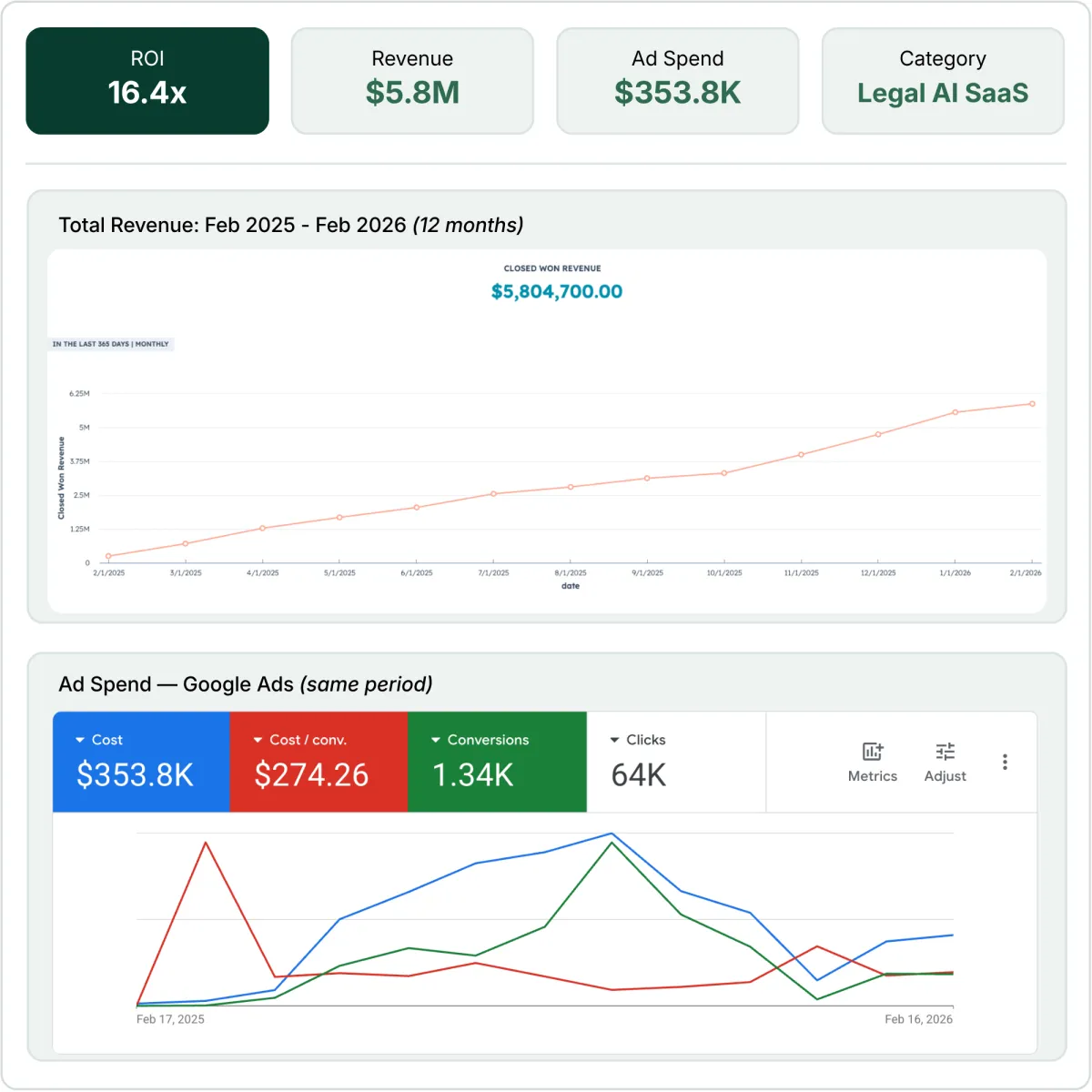
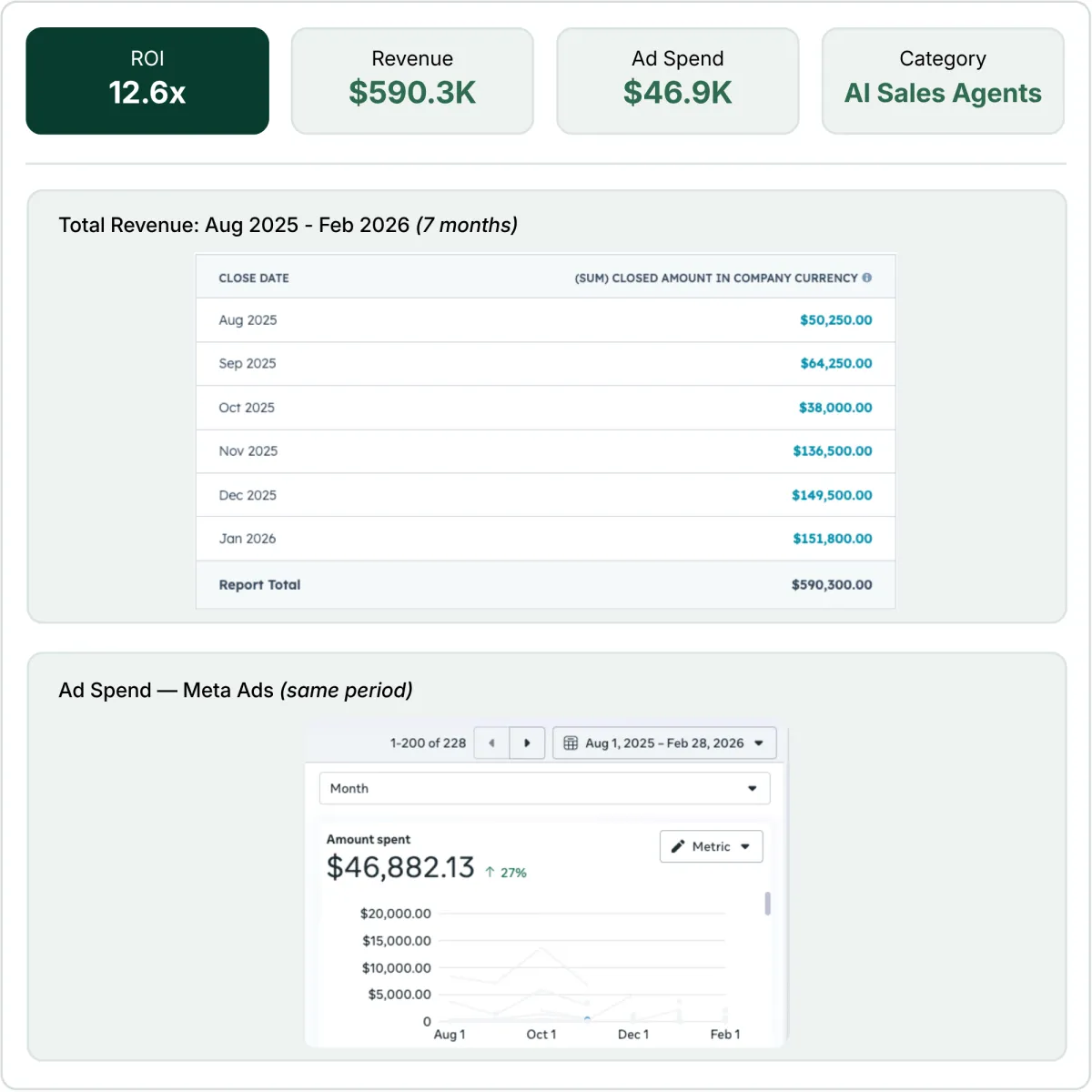
Proof of Claim
Who This Is For
You're building a B2B SaaS company with real revenue and real customers.
You’re past the point of proving the product works.
You're not trying to survive in your category – you're trying to dominate it.
You care about ARR and your bottom line – not impressions, reply rates, or any other vanity metrics.
You don't care about tactics.
You want a system that compounds, gets sharper over time, and doesn't need to be reinvented every quarter.
If that's you, keep reading.
The Best Time To Dominate Market Share
High interest rates, economic uncertainty, and the explosion of AI are forcing the market to adapt.
A period of correction always follows a period of excess, and the last decade has been excessive:
Cheap capital
Double-digit revenue multiples
Growth at any cost
Hiring ahead of demand
Raising another round whenever growth slowed
A healthy reset is required to stop rewarding irrational behavior and restore some soundness to the market.
As a result of this shift, businesses are forced to adopt or build new technology to achieve one of two things:
Reduce the capital required to generate growth — or generate more growth from the same capital.
The most savvy are using this shift as an opportunity to improve both sides of the equation faster than their competitors:
Requiring less capital to grow — while generating substantially greater returns from every dollar they invest.
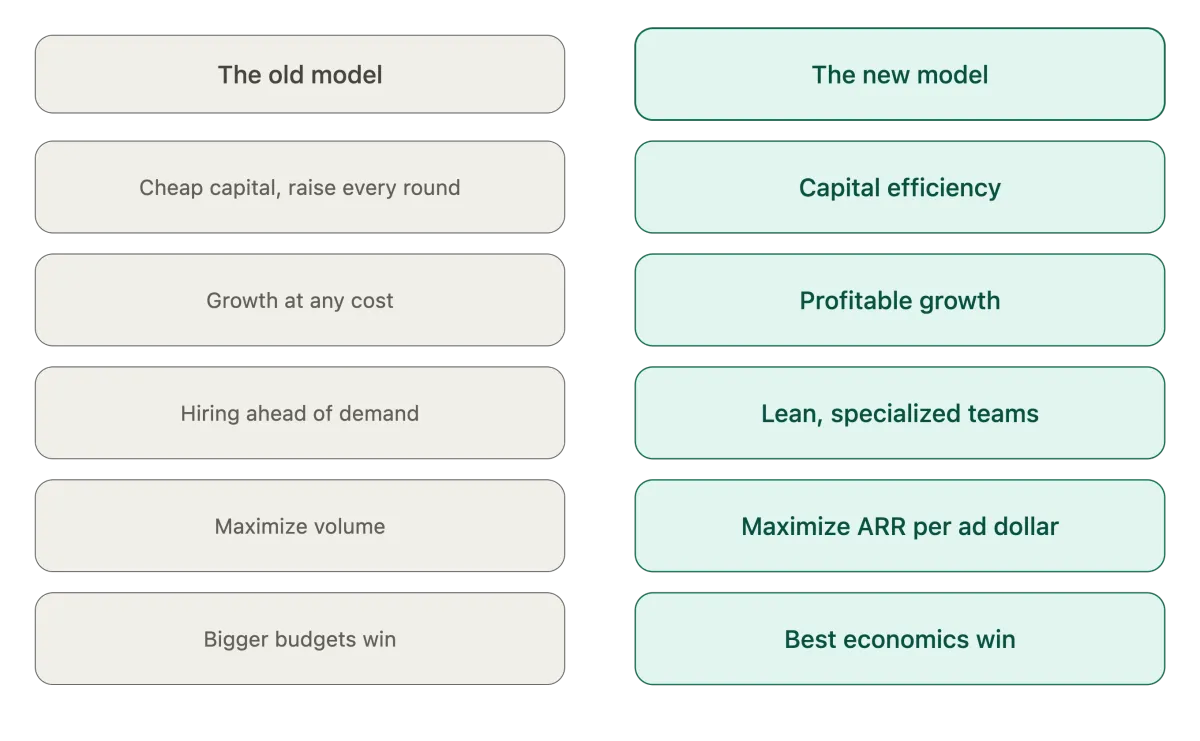
At the strategy level, companies are narrowing their focus to the highest-leverage opportunities and eliminating everything that doesn't meaningfully contribute to profitable growth.
At the product level, AI is reducing the time, cost, and headcount required to achieve product resonance, so margins are improving.
At the marketing and sales level, mechanisms like direct response copywriting (long form sales letters), video, and paid traffic platforms are being and will continue to be used to drastically increase the efficiency of distribution for any offer.
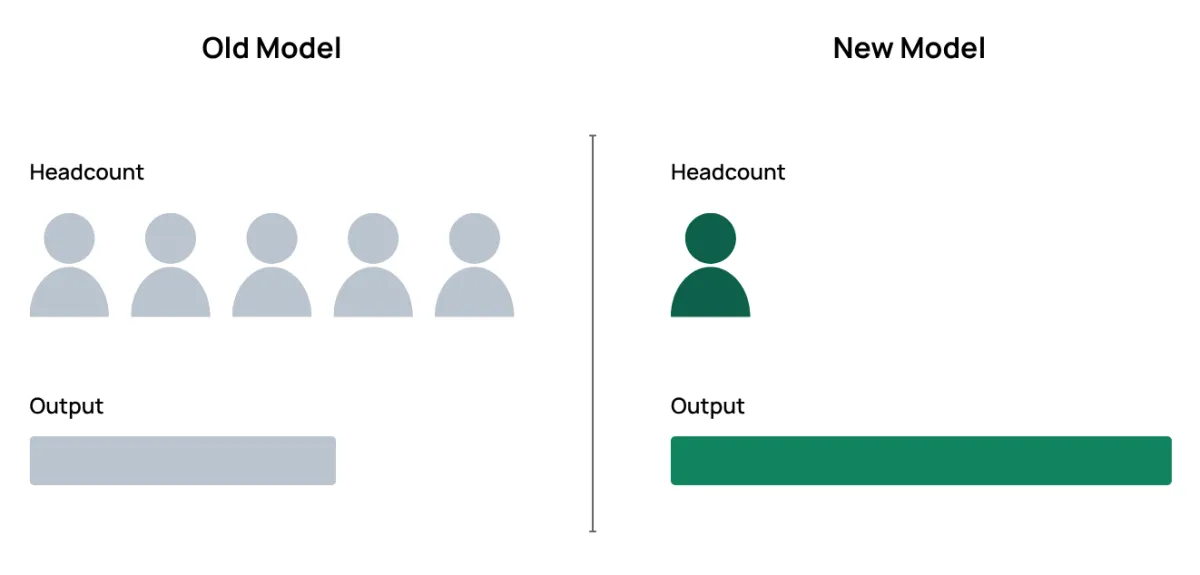
As a result, growth teams will become smaller, more specialized, and dramatically more productive as A.I. and high-leverage acquisition systems replace repetitive manual execution.
This enables companies to generate more revenue per employee, scale without proportional increases in headcount, and produce greater returns from every dollar invested in growth.
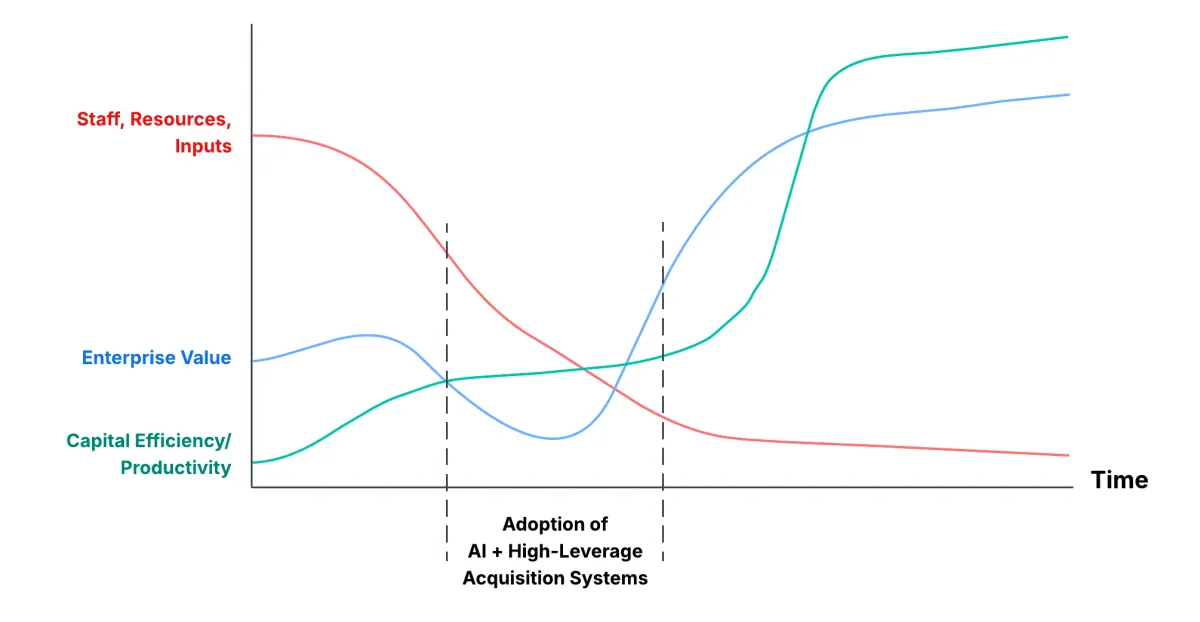
This creates a compounding economic advantage.
Companies that generate greater returns from every acquisition dollar can reinvest back into growth sooner and more aggressively.
That allows them to capture market share while competitors remain constrained by inefficient growth models.
Most SaaS companies are still operating under yesterday’s model – adding headcount, tools, and spending whenever growth slows.
This creates a temporary window for companies that adapt first to establish positions that become progressively more expensive for competitors to challenge.
Advertising
Every scalable business eventually competes for attention.
Today, most of that attention is controlled by the online platforms:
Meta, Google, LinkedIn, X, TikTok, and a few others.
These platforms are steadily tightening access to their audiences while automating and monetizing more of the distribution process.
Outbound prospecting channels are becoming more regulated and difficult to use.
LinkedIn restricts connection requests and charges for access to prospects.
Email providers have introduced stricter authentication, reputation, and spam requirements that make it increasingly difficult to reach buyers at scale.
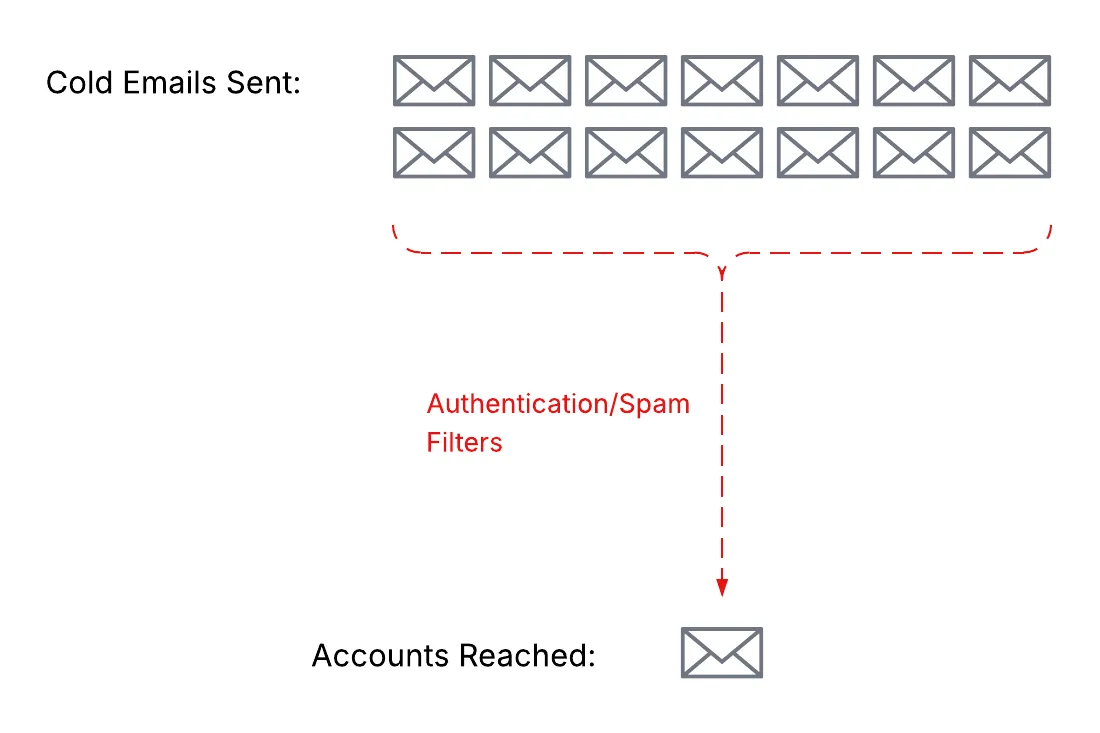
Organic traffic is becoming equally difficult to exploit.
A.I. has collapsed the cost of producing content, creating an endless supply of posts, videos, newsletters, podcasts, and opinions competing for a limited amount of attention.
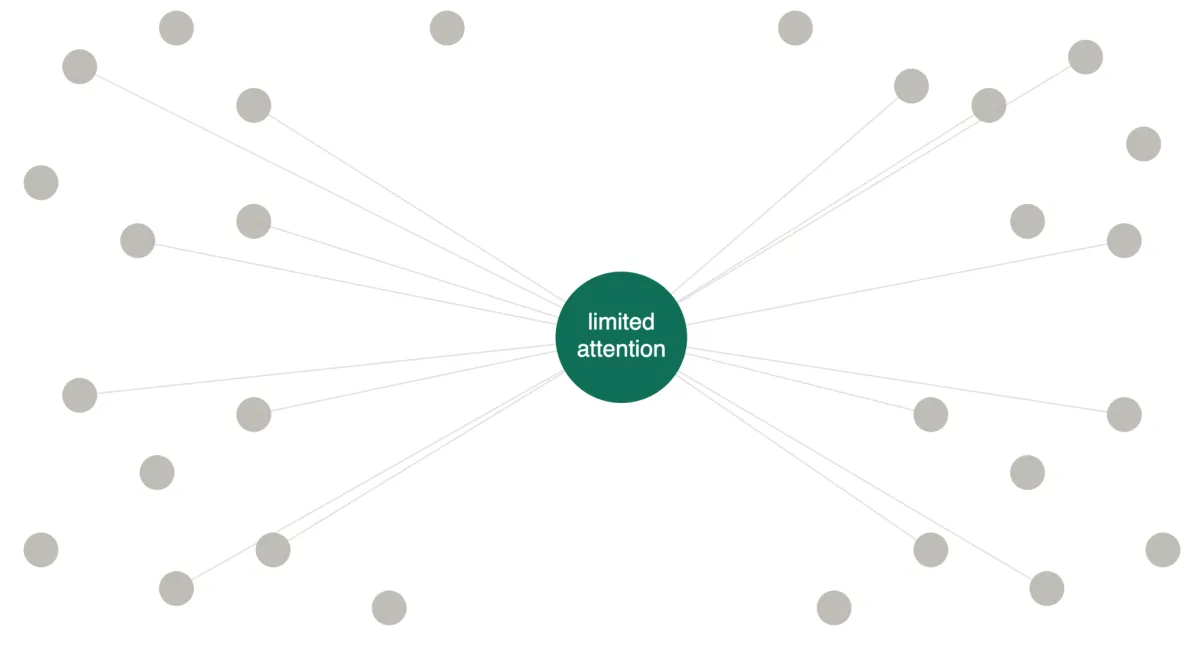
As the volume of content increases, organic reach becomes less predictable.
Companies are forced to publish more frequently, manufacture controversy, comment on recent events, or compete as entertainment businesses simply to remain visible.
In-person conferences can be valuable, particularly for developing relationships and closing complex deals.
But they are expensive, episodic, geographically constrained, and difficult to scale.
Why depend entirely on one-to-one interactions when paid advertising and long-form direct-response copywriting allow one argument to reach an entire market?
So if advertising is becoming increasingly necessary, how do we use it to generate exceptional returns?
Advertising platforms have become so advanced that they now automate much of the targeting, bidding, placement, optimization, and even creative production required to run a campaign.
Anyone capable of clicking a button can launch an advertisement.
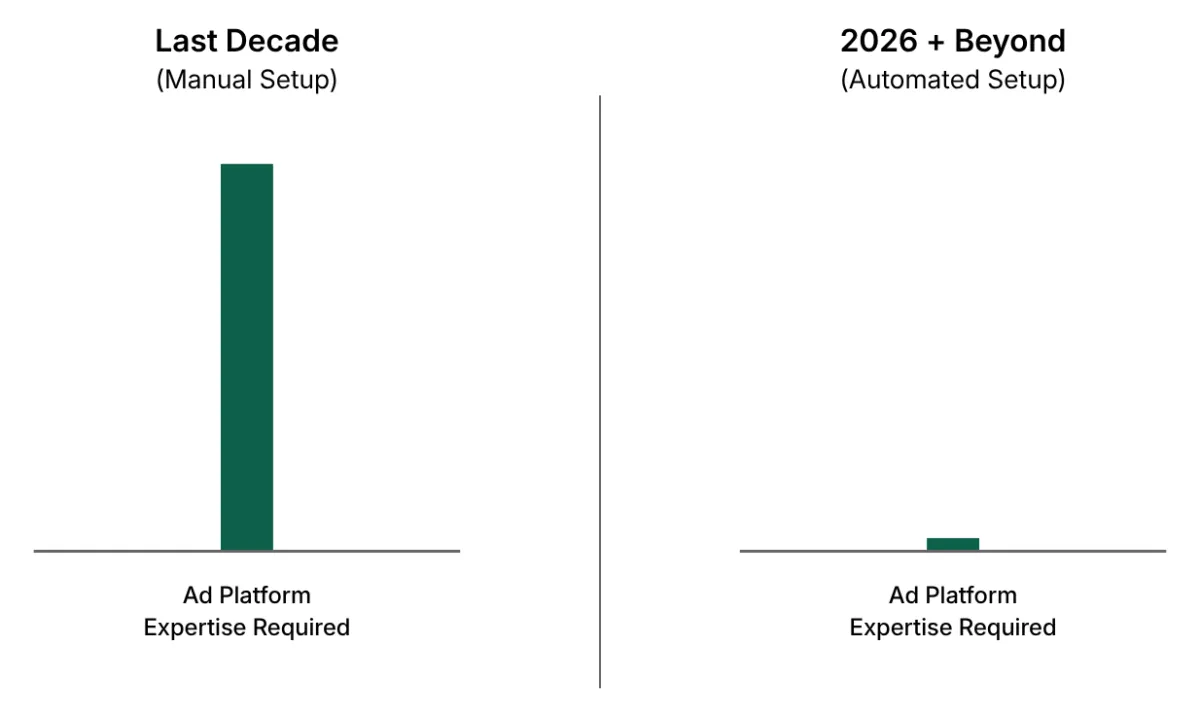
Knowing how to run the platforms isn't a real advantage anymore.
Media buying is automated now. Anyone can access it.
So the competition doesn't happen on the dashboard.
It happens at the level of the sales argument.
Platforms can find you impressions.
They can't make an ordinary offer remarkable.
They can't manufacture proof.
And they can't build the argument that convinces a skeptical market you're worth more than every alternative.
That's the level platforms don't operate on. It's also the level that decides who wins.
Most companies never get there.
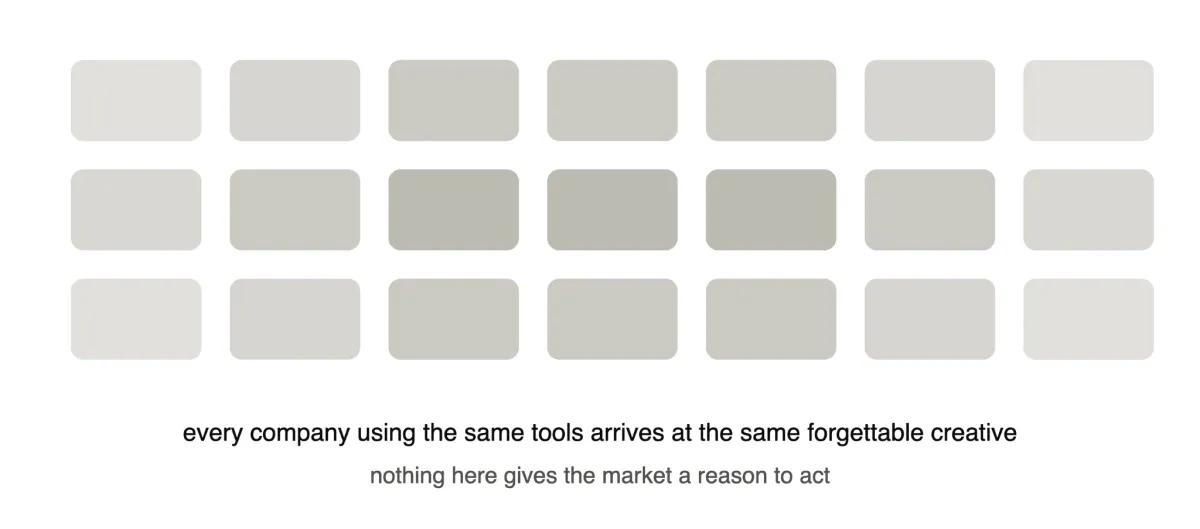
They run the same platforms, the same targeting, the same campaign structures, the same AI tools as everyone else.
Then they point that traffic at a generic offer and a weak argument, and call it a strategy.
Few channels can match the speed, scale, control, and measurability of paid advertising when growing a business.
So if paid advertising is the greatest lever, how do you win?
Here’s the truth:
You can achieve capital-efficient, explosive growth, sharpen product-market-fit, and predictably generate $10-$15 in New ARR for every $1 spent on acquisition when you leverage paid ads and Open-Demand Sales Letters.
What is an Open-Demand Sales Letter?
Below are some examples:
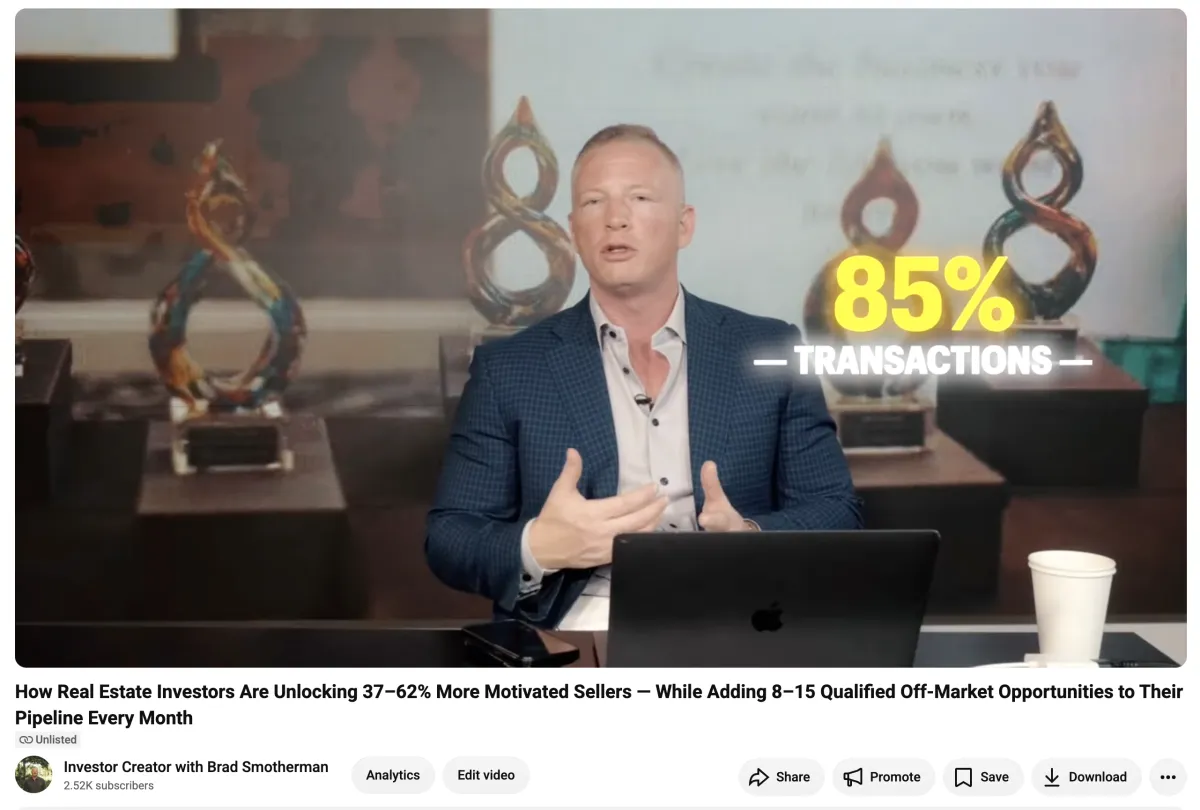
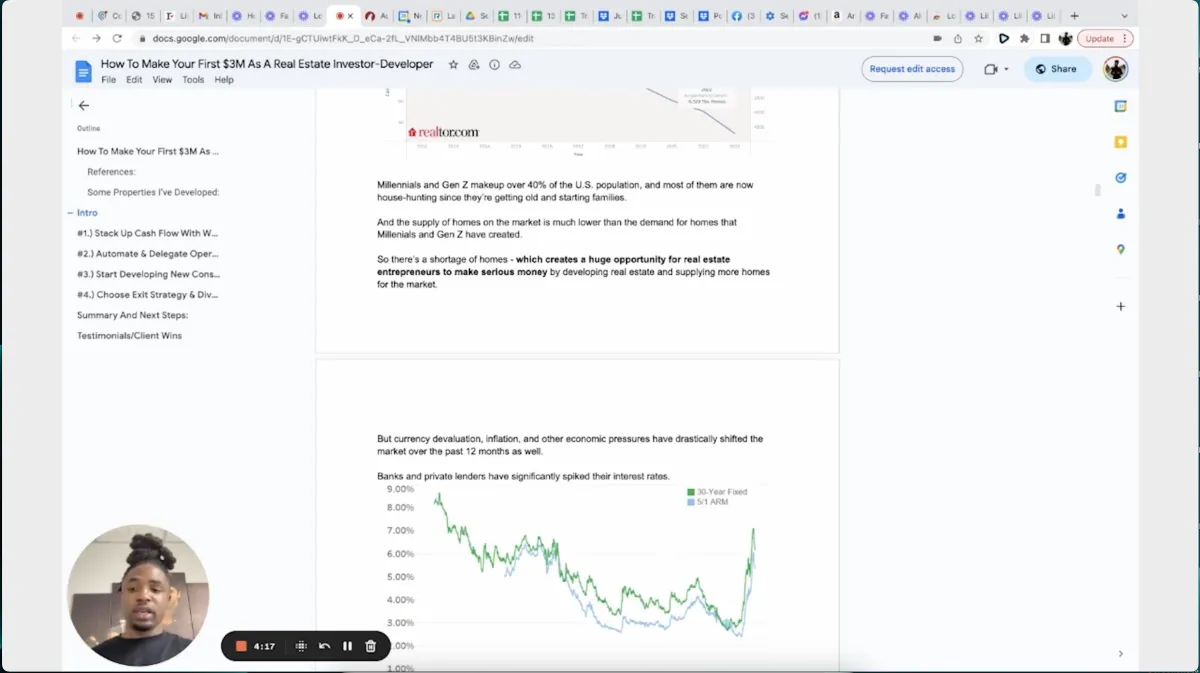
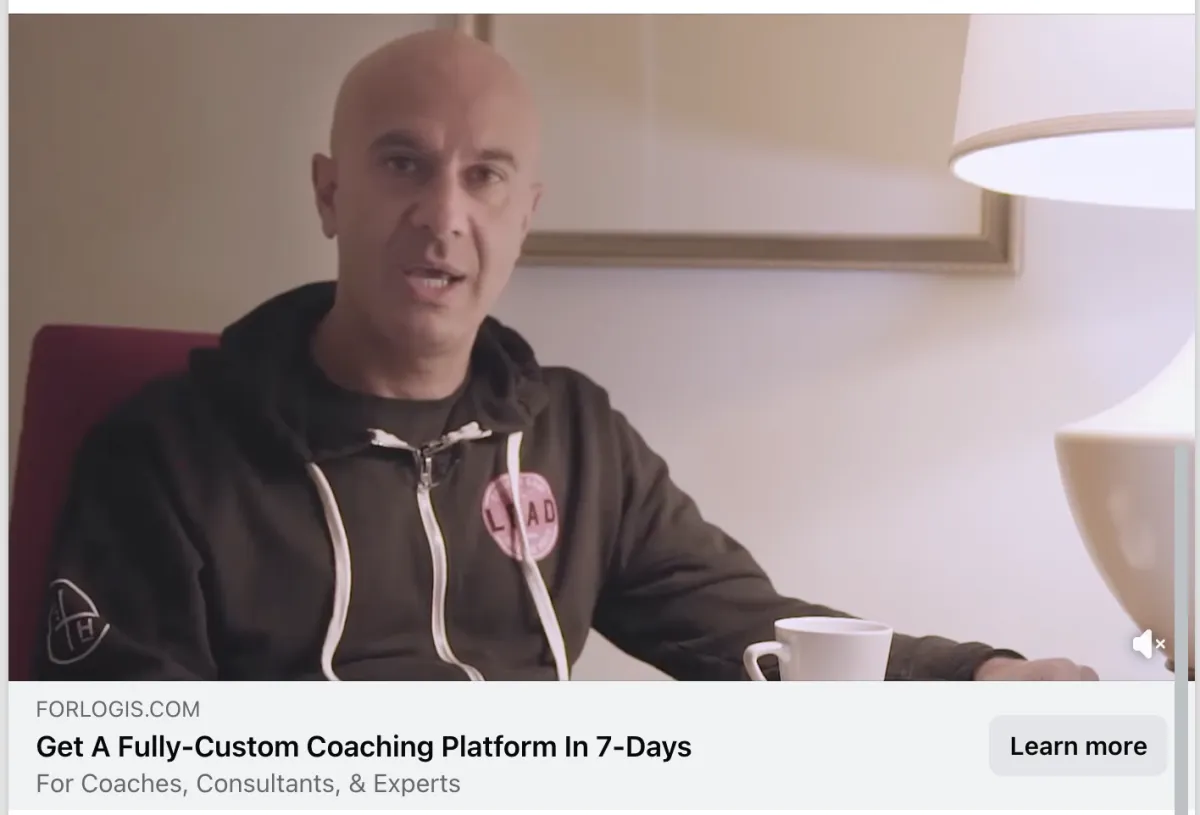
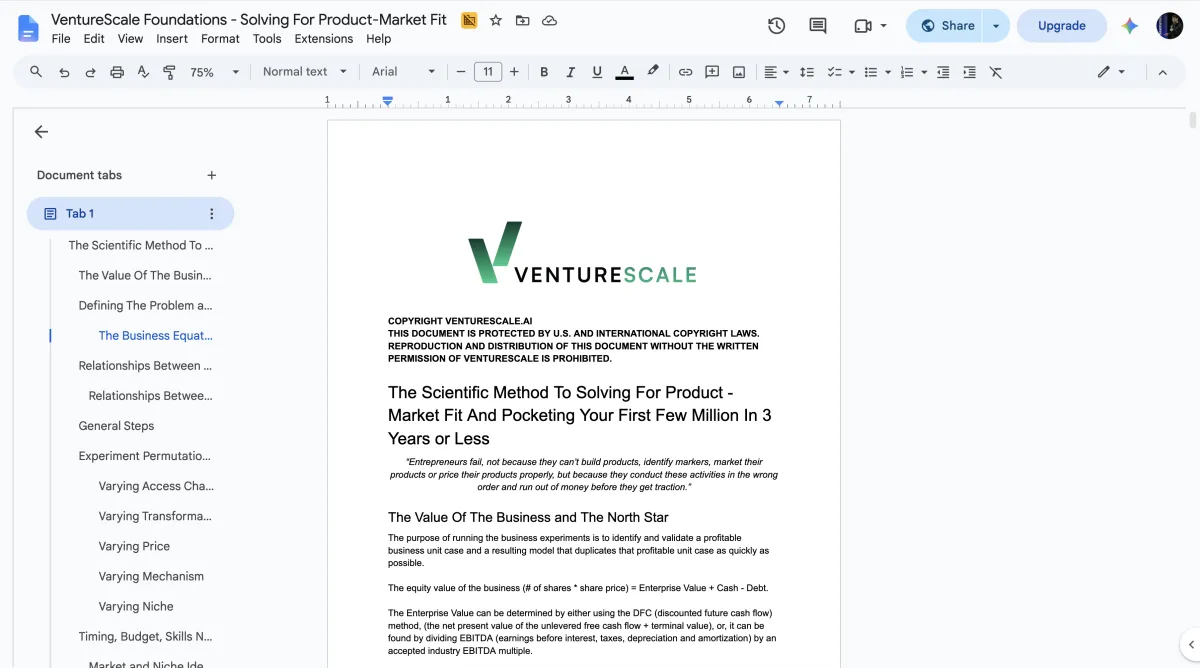
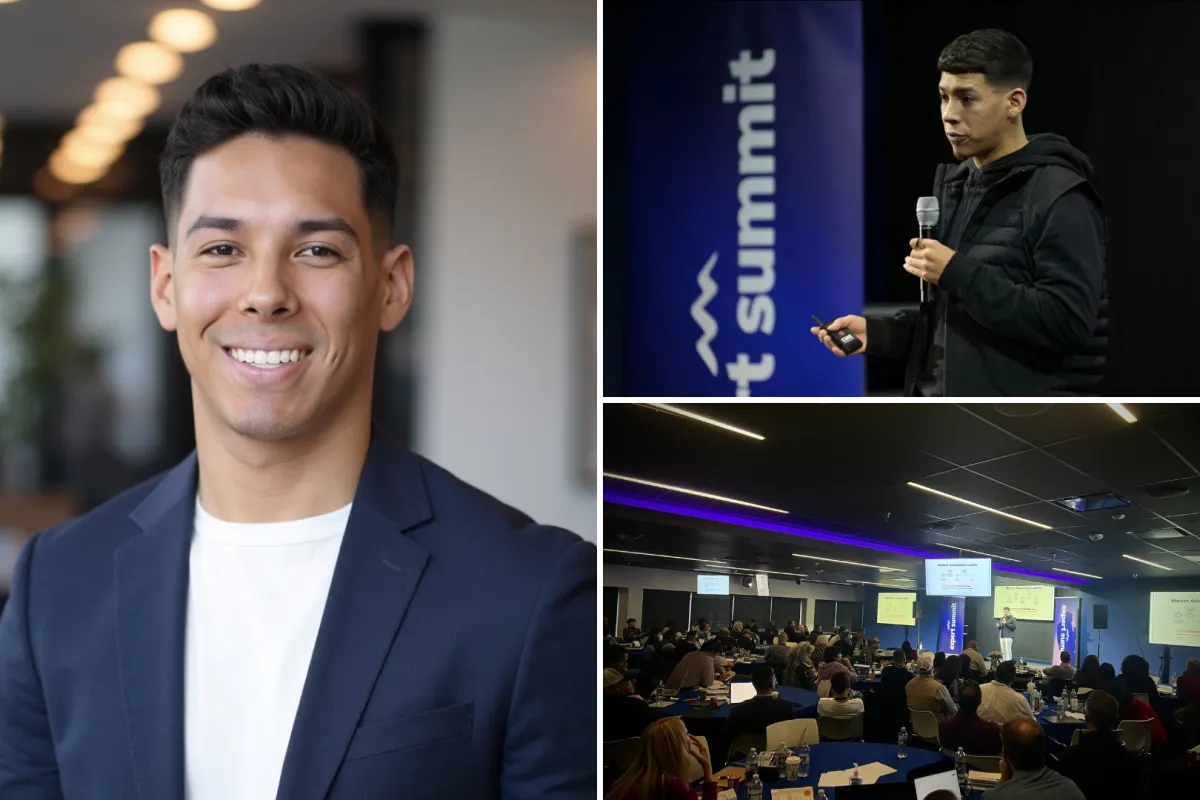
For context, my name is Lex Rivera. I’m the founder of VentureScale and I’ve been scaling startups since 2018.
I've worked with 109 B2B brands — from horizontal platforms like CRM and marketing automation, to vertical AI in legal, recruiting, and real estate.
I built Open-Demand Sales Letters for InvestorCreator that went on to produce $6.2M in sales.
I built Open-Demand Sales Letters for AllinOneMarketing that went on to produce $2.8M in sales.
I built Open-Demand Sales Letters for GrowFlow that went on to produce $1.7M in sales.
The Open-Demand Sales Letter (ODSL)
An Open-Demand Sales Letter (ODSL for short) is one sales argument, built for one market, for one offer – and it never stops improving.
It’s built as a written page, and then it's rendered as video (ODSL Video).
The Open-Demand Sales Letter is the written version.
The Open-Demand Sales Video (ODSL Video) is the same exact asset, in video form.
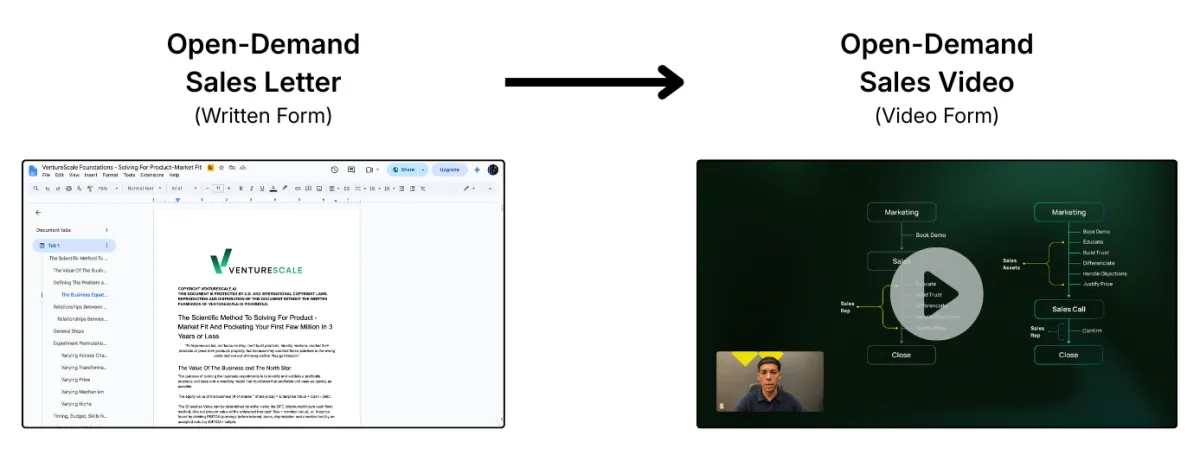
Both are the same asset, giving the buyer 2 forms of consumption based on preference.
The ODSL gets proven first, (as a closing asset) against real traffic and real objections.
Once it’s proven to convert sales, we push it to Top-of-Funnel and run it as the primary ad.
As a result, the ad holds attention longer than anything else in the feed.
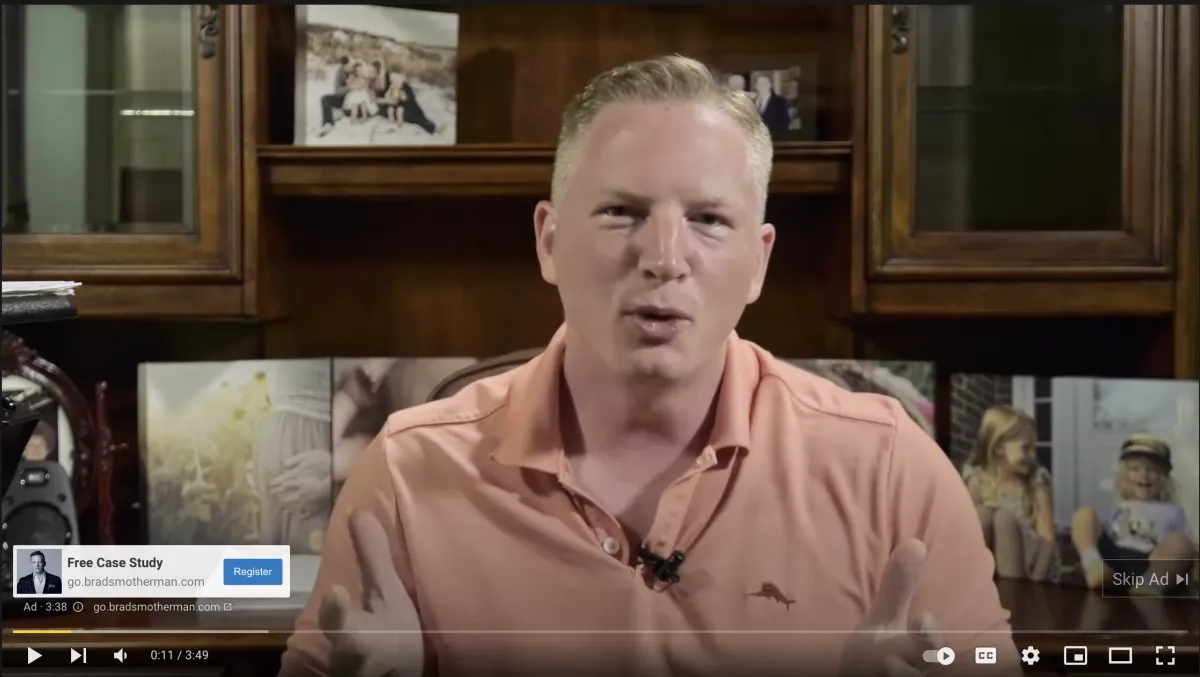
Because the ad isn’t an ad – it’s a long-form, value-packed, sales video that’s already been proven to convert buyers.
And the platforms reward you heavily for that level of engagement.
Watch time and engagement earn cheaper delivery. Everyone else is buying attention. You're being handed a discount for keeping it.
It never runs out of ammunition. Every ad eventually tires – that's just physics, creative wears out the same way anything gets worn out from repetition.
But the ODSL behind it doesn't tire. It's still there, still sharp, ready to produce the next cut the moment the last one slows down.
Your competitors are praying for lightning to strike twice. This is a machine that keeps striking.
It shortens the sales cycle significantly, because the prospect walks in already heavily sold.
The ODSL did the educating. It did the proving. It took every objection off the table before your rep ever picked up the phone.
And it collapses the org chart.
One argument. Written once, refined forever, by one person.
Distributed on one platform. Routed to one page. Tracked with one tool.
No department. No handoffs. No twelve people producing twelve different messages and praying something sticks.
That's capital efficiency. That's growth without the overhead. That's sales, done by a single asset, instead of an entire orchestra of people.
The demand this creates doesn't just fill your pipeline — it forces your product to keep up.
Prospects show up asking for more than you've built, which is the best pressure a product team can feel.
Product-market fit tightens. Pricing power follows it.
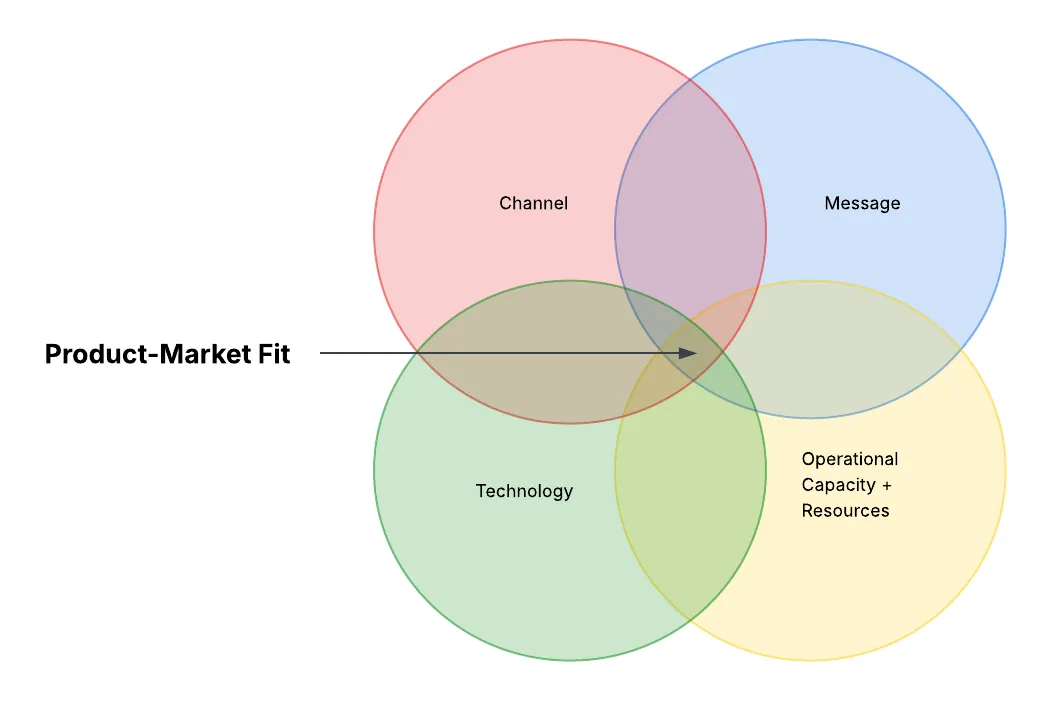
Every hour you spend, every dollar you deploy, starts returning more than it did the quarter before.
A single Open-Demand Sales Letter can change the entire trajectory of a business.
Done right, it cuts the capital required to grow.
It multiplies the return on every acquisition dollar you spend.
It positions the product so cleanly that closing requires significantly less skill — your reps become order-takers.
It's already proven itself across various B2B SaaS markets — horizontal platforms like CRM, sales enablement, and marketing automation, and vertical AI like legal AI, recruiting SaaS, cannabis ops, real estate AI, and others.
There's nothing more leveraged in business than an Open-Demand Sales Letter done right.
And you won't find the process for building one anywhere else.
No one else sells SaaS this way, because no one else spent the years discovering how.
We built it across hundreds of iterations against real ad spend and live markets, refined it in every B2B SaaS vertical we've entered.
Open-Demand Sales Letter Creation Process
The market moves.
What convinced buyers last quarter doesn't always convince them this quarter.
So the process is built to move with it.
This is why the sales letter stays in its most profitable state instead of decaying the way a normal ad campaign does within weeks of launch.
It's also brutally efficient with your capital.
You can build the first version of the letter and know, within days, exactly what a lead costs you and what a sale costs you – on a small test budget, not a six-figure guess.
It works whether you're bootstrapped or sitting on a war chest.
You'll see real signal fast; results inside the first week of launch are normal here, not a best-case story.
It also pulls you to the top of the market where there is the most profit.
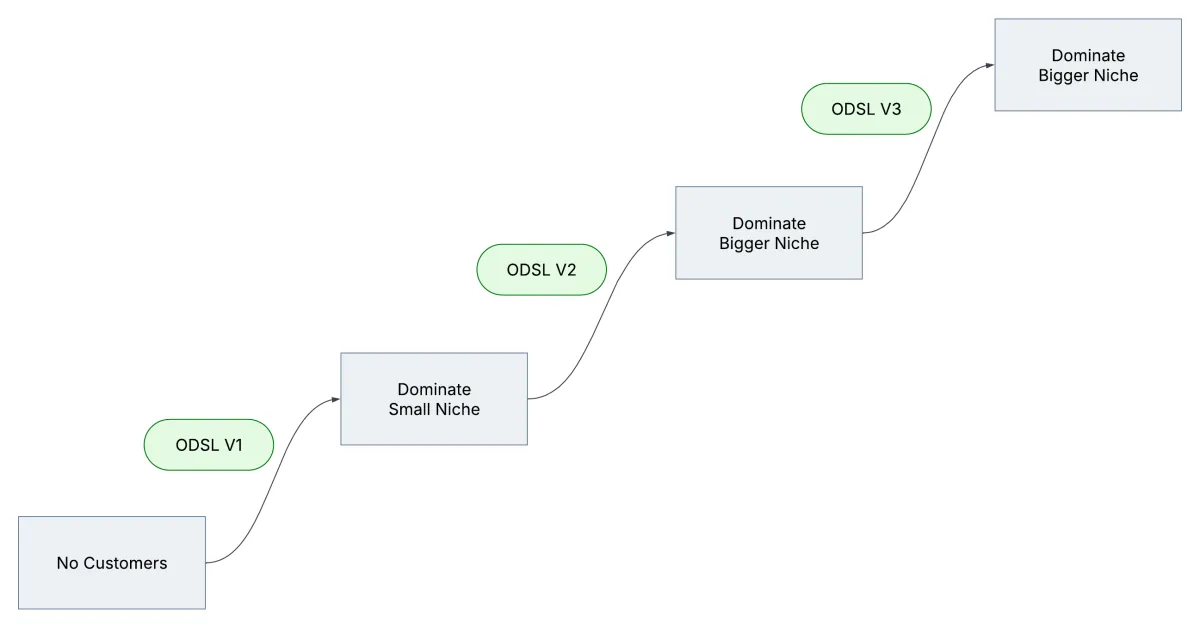
Here's what most SaaS founders and growth teams get backwards: your customer acquisition and your product are the same conversation.
The Open-Demand Sales Letter only gets sharp by staying in constant contact with both – what the market says when they see your product, and what happens once they're actually using your product.
For it to convert, it has to be genuinely useful to the person reading it, not just clever.
So that's the whole focus, at every step. Useful, first and always.
The Overview
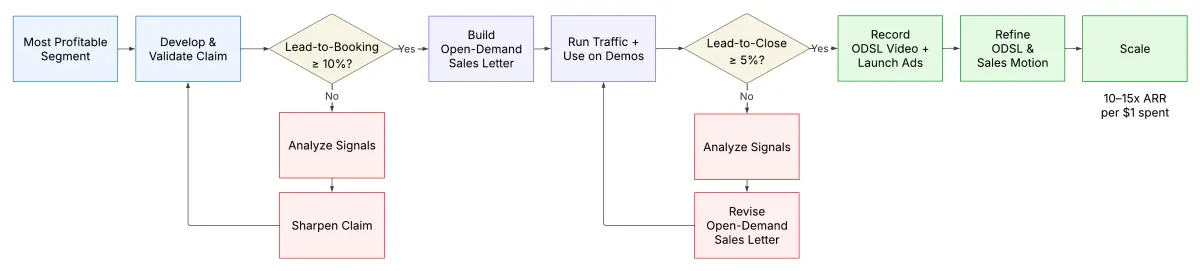
First we determine the most profitable segment using a profit-per-customer-per-unit-of-time formula.
If we don't target the top of the market, we leave the highest yield on the table.
Once we lock the target and direction, we develop a claim that cuts through the noise.
We cycle through claims using direct outreach or a small paid test, depending on budget until we have a claim that consistently hits above 10% Lead-to-Booking Rate.
Once we have a winning claim, we build the first draft of the Open-Demand Sales Letter (ODSL) using all of the buyer language/market insight collected up to this point.
We then run traffic to the ODSL and simultaneously use it on live demos.
We validate that the ODSL consistently closes a minimum 2% Lead-to-Close Rate (closes 2% of all leads, not just booked demos).
Once we validate the sales letter, we record its video format (the ODSL video) – and run it as the primary ad.
Alongside it, we build secondary short-form ads by pulling components straight from the same letter — different angles, different openings.
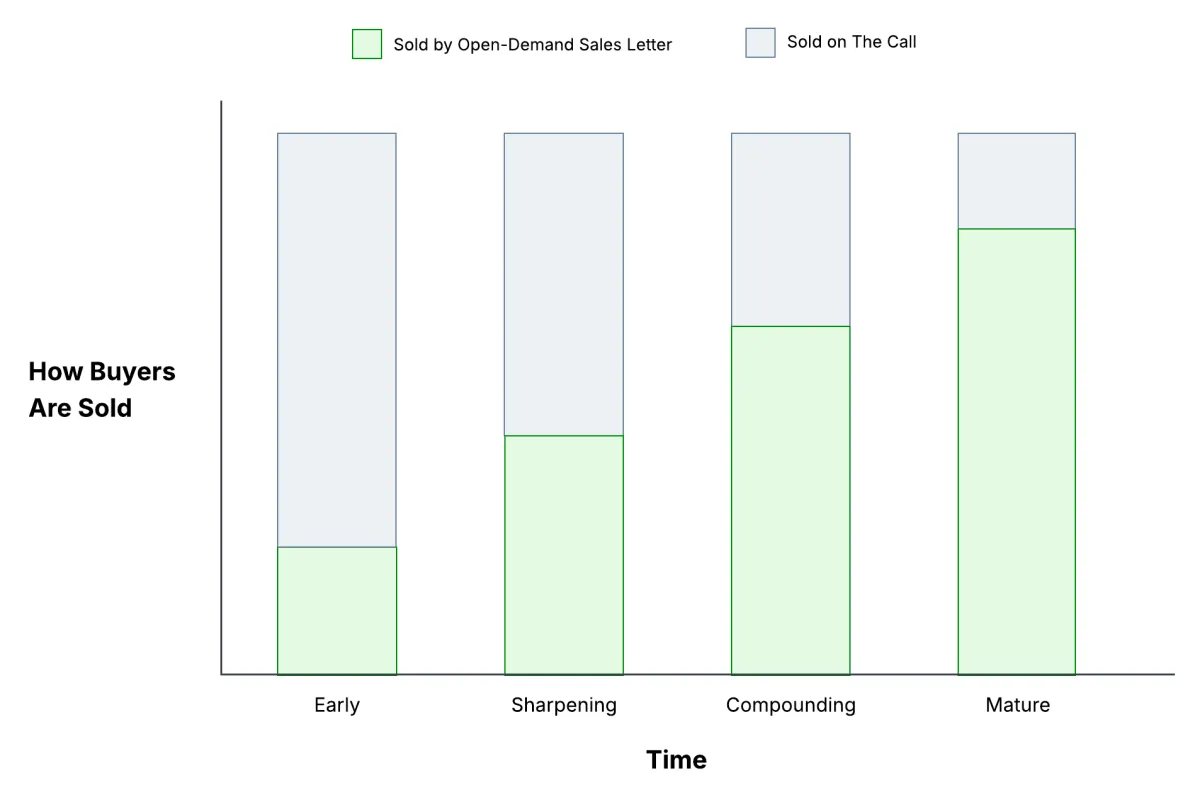
As the Open-Demand sales letter and video sharpen, the sales motion simplifies and profitability increases – 10-15x ARR for every acquisition dollar spent becomes your standard.
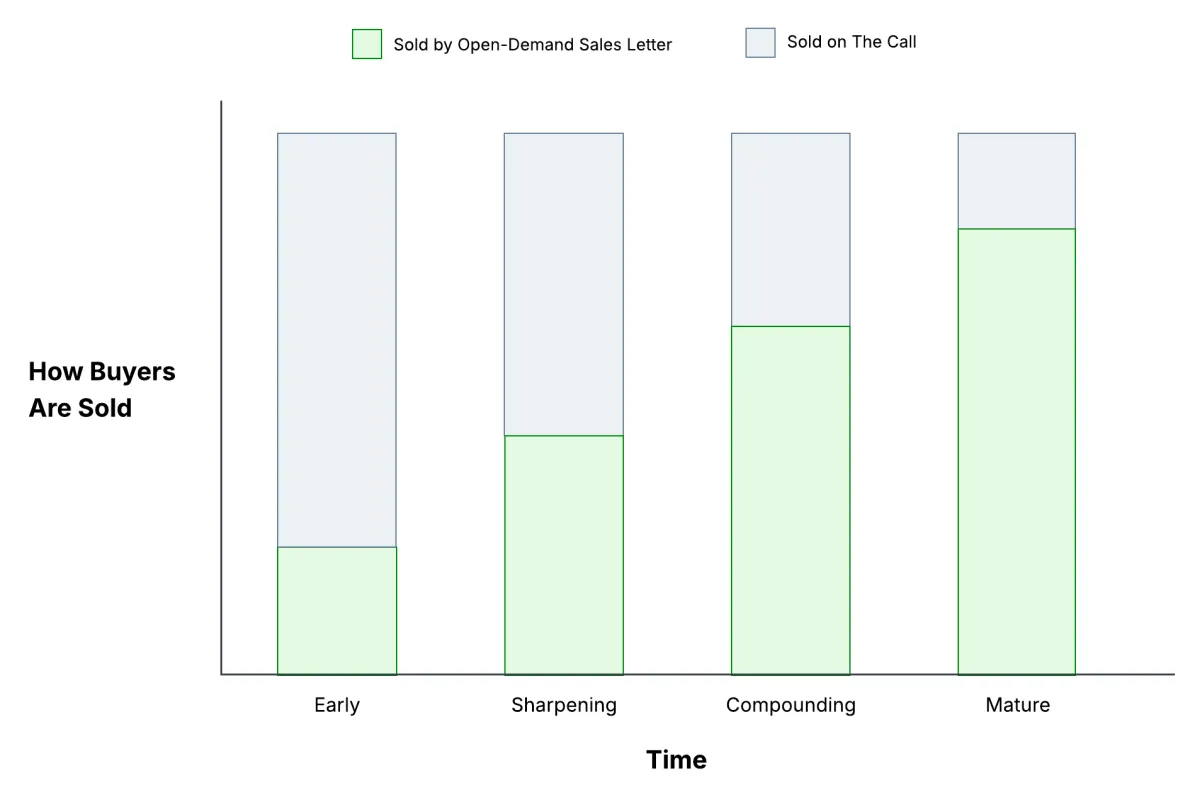
Fewer live calls are needed, because the sales letter is already doing most of the selling before a rep ever gets involved.
Eventually deals close through written word, video, and chat alone.
The Open-Demand Sales Letter does the selling — and the only problem left is keeping up with demand.
This isn't easy, and it's not what most sales and marketing teams are built to do.
Most teams split the ad account and the sales calls into two departments that never talk to each other.
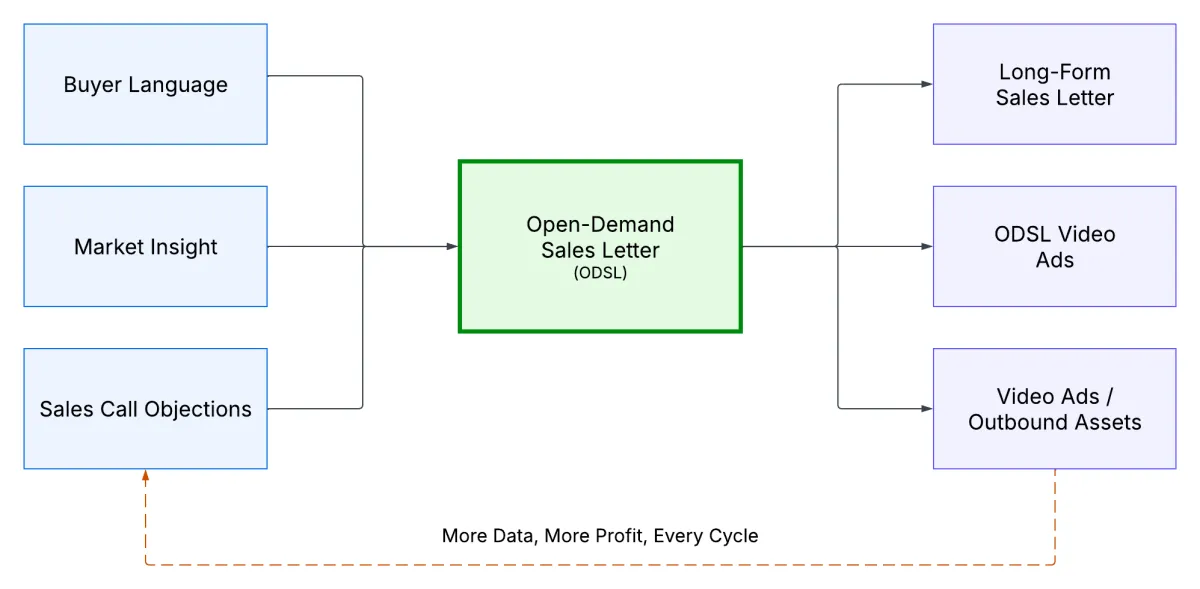
This process fuses them into one loop:
The ad data feeds the Open-Demand Sales Letter → The sales calls feed the Open-Demand Sales Letter → The Open-Demand Sales Letter feeds both right back.
And nothing scales until it's proven.
Step 1: Target The High End Of The Market
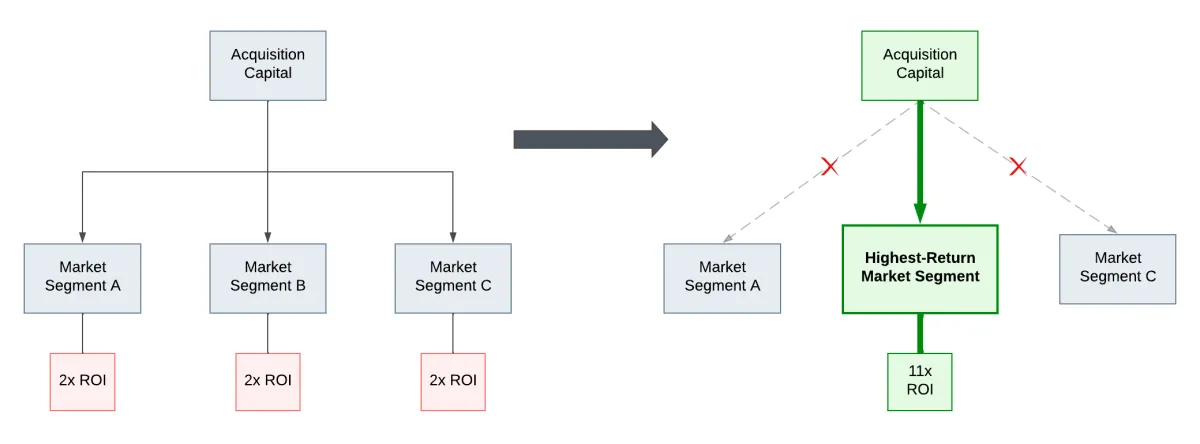
The first step is to focus on a single target.
We focus on a single target in a small, but valuable niche at the top of the market – the most expensive segment you can credibly serve.
This allows profit to be had immediately.
That profit funds the insight and infrastructure that gets applied to the lower and broader end of the market later.
If you already have customers across multiple segments, you rank them by profit per customer per unit of time to determine the niche with the highest profit velocity.
Profit velocity = (Price − Cost to Deliver − Cost to Close − Cost to Acquire) ÷ (Time to Close + Time to Collect)
For example, a $50,000 deal that takes 9 months to close and 3 more to get paid can sometimes be a worse target than a $15,000 deal that closes in three weeks and pays immediately.
Because the fast deal lets you recycle that capital and profit several times over in the same window the slow deal is still sitting in someone's procurement queue.
But a $50k enterprise contract with strong margin and a clean collection process can post a higher Profit Velocity than a dozen smaller deals that look faster on paper but bleed time in onboarding, support, or chasing payment.
The formula doesn't favor small or large.
It just forces the real comparison of profit relative to the time it actually takes to earn it – instead of letting deal size make the decision for you.
Research
Once the segment is determined, we go deep on it.
We dig into what's actually driving this buyer's decisions right now, what they're frustrated with, what they've already tried and abandoned.
This is done through direct interviews, live discovery calls, and AI-assisted research that scans review sites, forums, competitor content, and public sentiment.
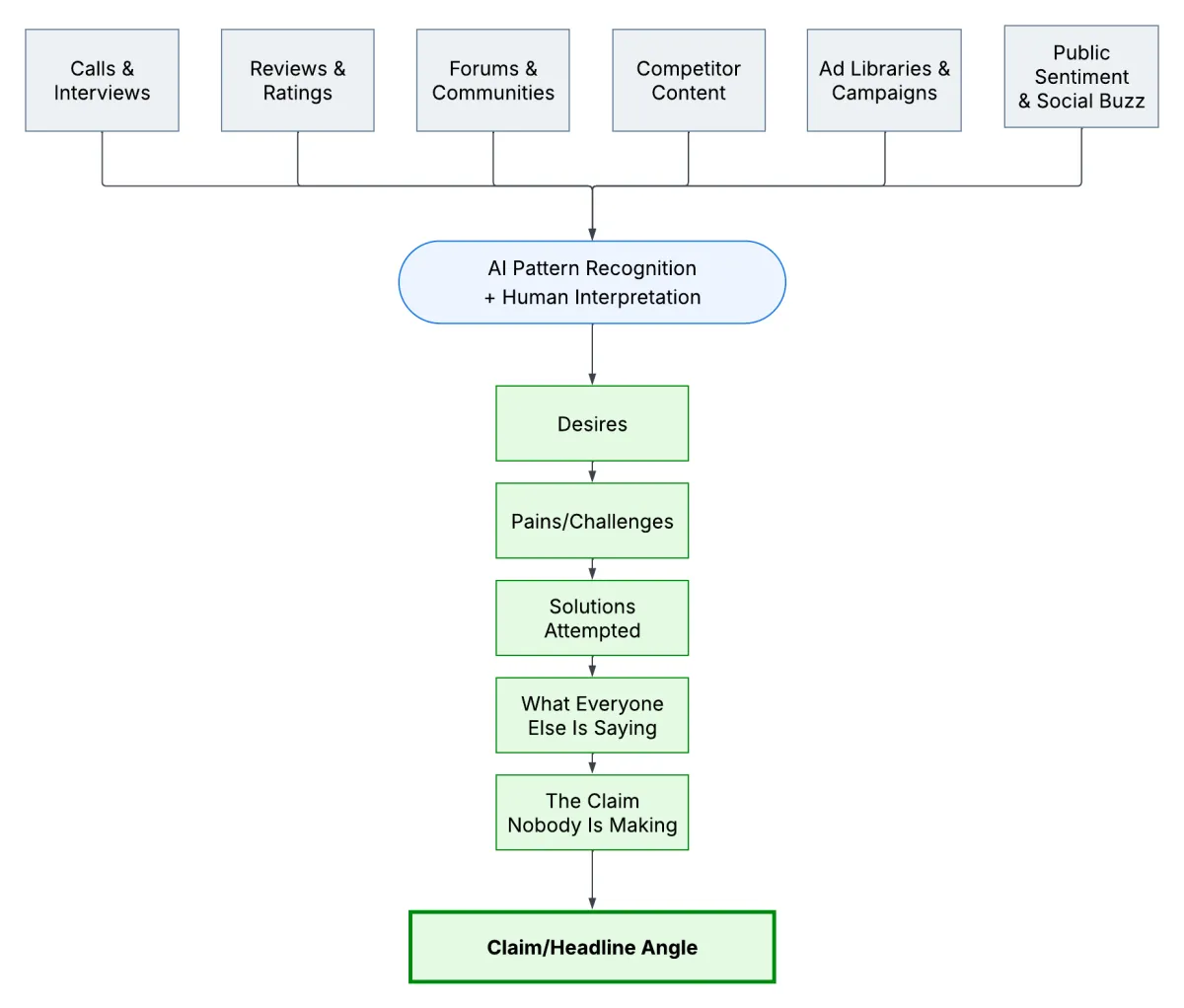
This is iterative — we're still learning in real time as calls happen.
We also map every claim already being made in this market.
This is what we use to build a headline that actually cuts through the market, instead of echoing what's already out there.
If nobody's making a specific claim to this exact segment, that gap is the opening.
Determine The Claim & Write The Headline
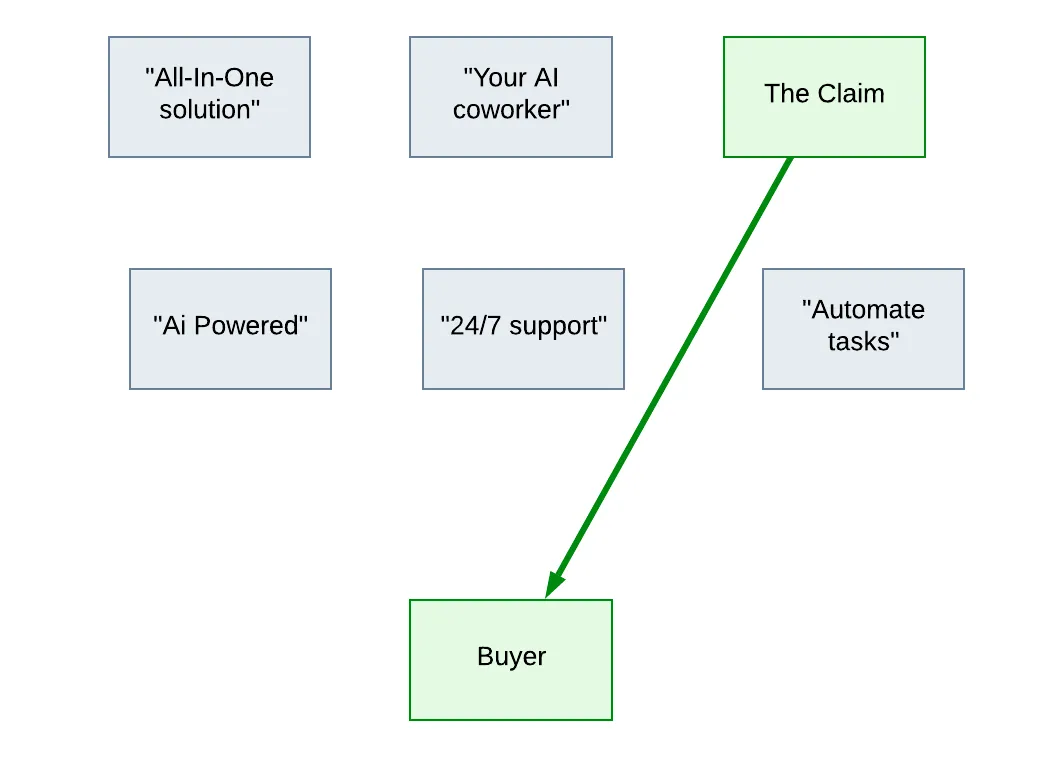
Every strong headline is built on a claim – the actual idea being promised.
The headline is just the sentence that carries it and pulls the prospect out of the cold and into your ecosystem.
The claim needs to be significantly stronger than what already exists in the market, or it won't get resonance.
The resonance of the claim depends on the sophistication of the market relative to the claim:
If you're first to market with the result, lead with the raw claim.
If you're second to market with the claim, elaborate it.
If the claim has been elaborated to its limit, introduce a new mechanism – a credible new ‘how’ – typically cheaper, better, or faster than what already exists.
If you're second to introduce the mechanism, elaborate the mechanism's capability.
If the market has seen both the claim and the mechanism, shift to identification.
You shift to identification by making the exact buyer feel understood in a way they’ve never felt before.
The claim is a proxy for how strong the underlying offer actually is (since the claim is theoretically independent of what you're selling at the moment you make it).
If the claim doesn’t resonate, the entire system breaks.
So you cycle through claims until we find a winner (covered in the next step).
Status Delta
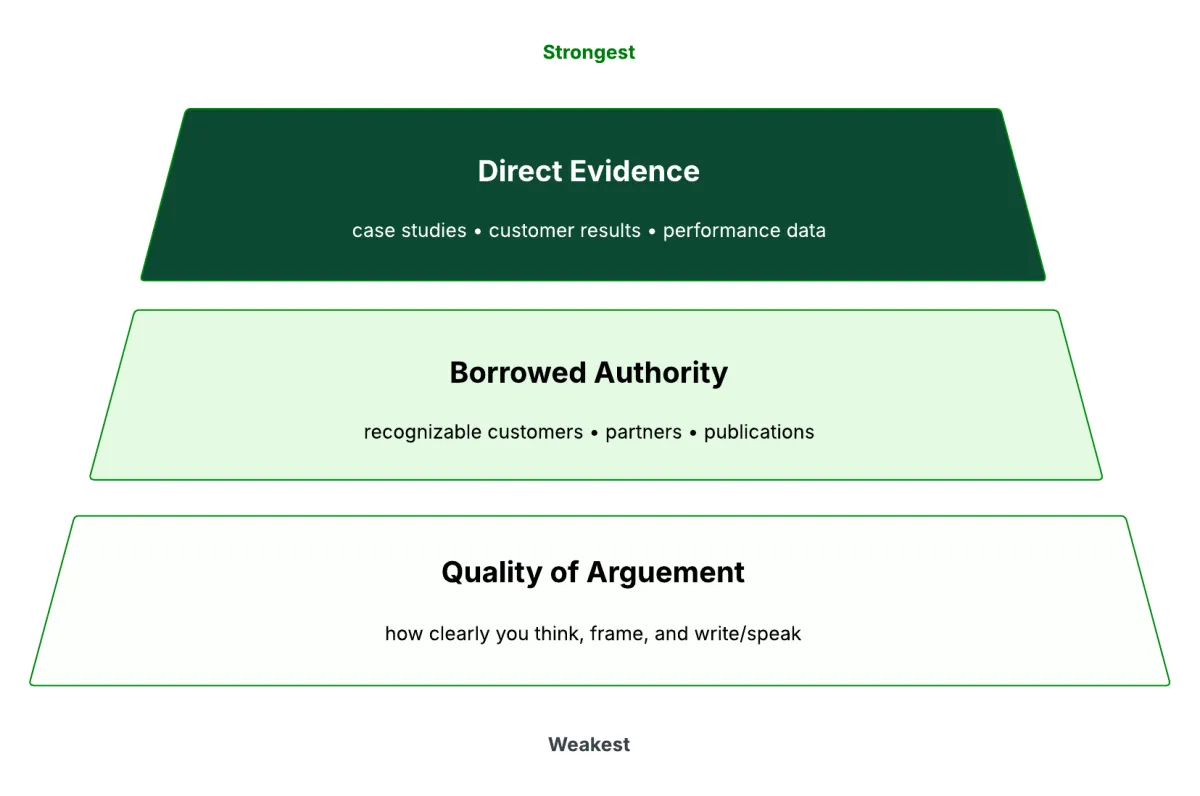
To get believability from the claim, you need status delta – the gap in authority between you and the prospect.
Without status delta, the claim isn't believed and the prospect doesn't show up.
The strongest form of status delta is direct evidence the claim is true though case studies, review, and testimonials.
If you don't have those yet, you borrow authority deliberately by aligning with credible brands or institutions.
And even without direct evidence or borrowed authority, you can still create status delta through the quality of your thinking:
How clearly you write
How sharply you frame the problem
How well you understand the buyer
Every element of the letter either strengthens belief or weakens it.
The objective is to invest in the signals that return more than they cost.
Every market trusts different signals.
Identify which signals your buyers already respond to, then reinforce them throughout the sales letter.
Step 2: Validate The Claim (Outreach/Paid Test)
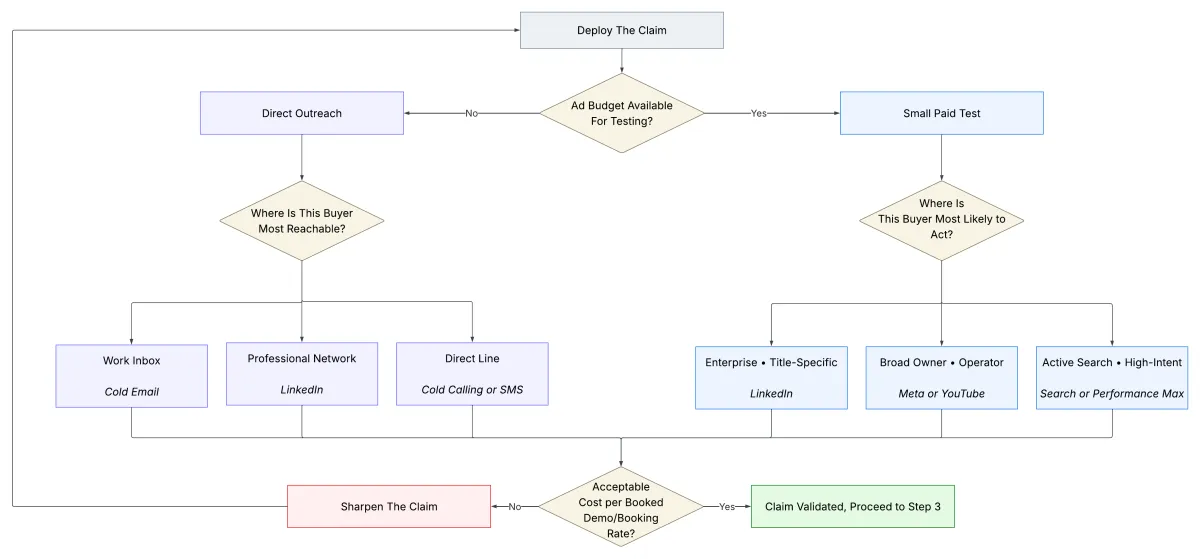
The purpose of this step is to confirm the claim is sharp enough to cut through everything else your buyer is already seeing - And strong enough to convert into real meetings and real revenue, not just curiosity.
There's always a way to win the market's attention – you find it by cycling through claims until you hit resonance.
First, we look at what's already available – existing email lists, an audience, warm relationships, anything already in hand.
We target these prospects first since they’re the lowest hanging fruit.
Then the path splits based on audience and budget, not preference.
If there's no meaningful budget for ad spend we run direct outreach.
The outreach platform we use is based on where this specific buyer is most reachable.
If there is budget available for ads, we run a small paid test campaign.
The ad platform we use is based on where this specific buyer is most likely to act.
Starting Funnel Layout
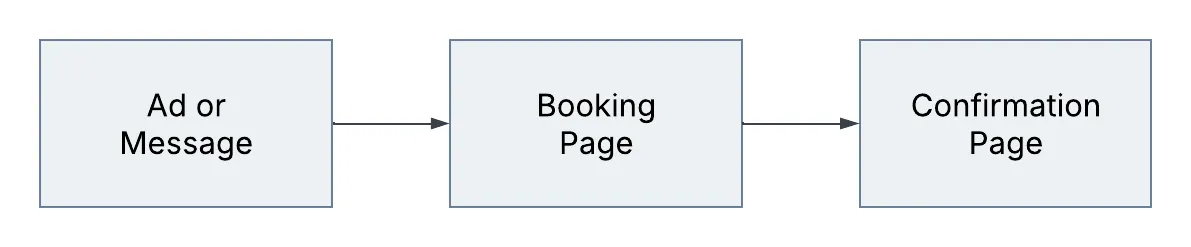
If we’re running a small paid test for this stage, we place the claim in the ad copy as well as the actual ad creative.
If we’re running direct outreach for this stage, we place the claim in the actual outreach message.
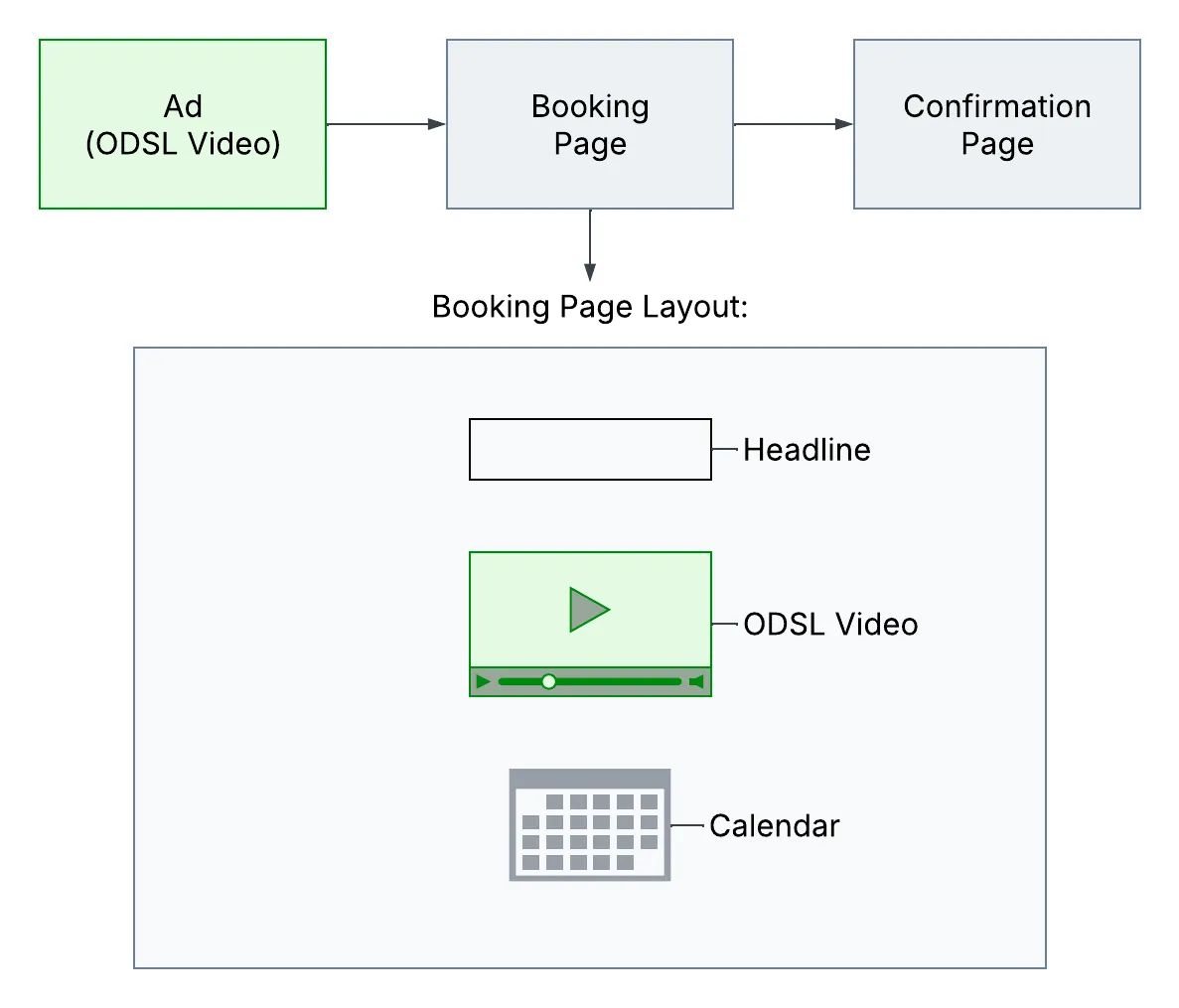
We send prospects to the booking page straight from the ad or outreach message – and then we route them to a confirmation page after booking.
This ad and funnel setup is intentionally simplified so that we can hyper-isolate the claim and ensure that’s the core component being tested.
At this stage the prospect won't fully understand what you do yet – they show up out of curiosity, pulled in by the claim alone.
Success Gates
We’re measuring Demo-Booking Rate: the percentage of prospects exposed to the claim who book a demo.
For direct outreach, it’s demos booked per account reached. We need a minimum 2% demo-booking rate.
For paid testing, it’s demos booked per booking-page visitor. We need a minimum 10% demo-booking rate.
We don’t move onto step 3 until we’ve hit these numbers.
Step 3: Create The Open-Demand Sales Letter
Now that we know who we're speaking to, understand their problem in their own words, and know what claim cuts through the noise and grabs their attention – we build the sales letter.
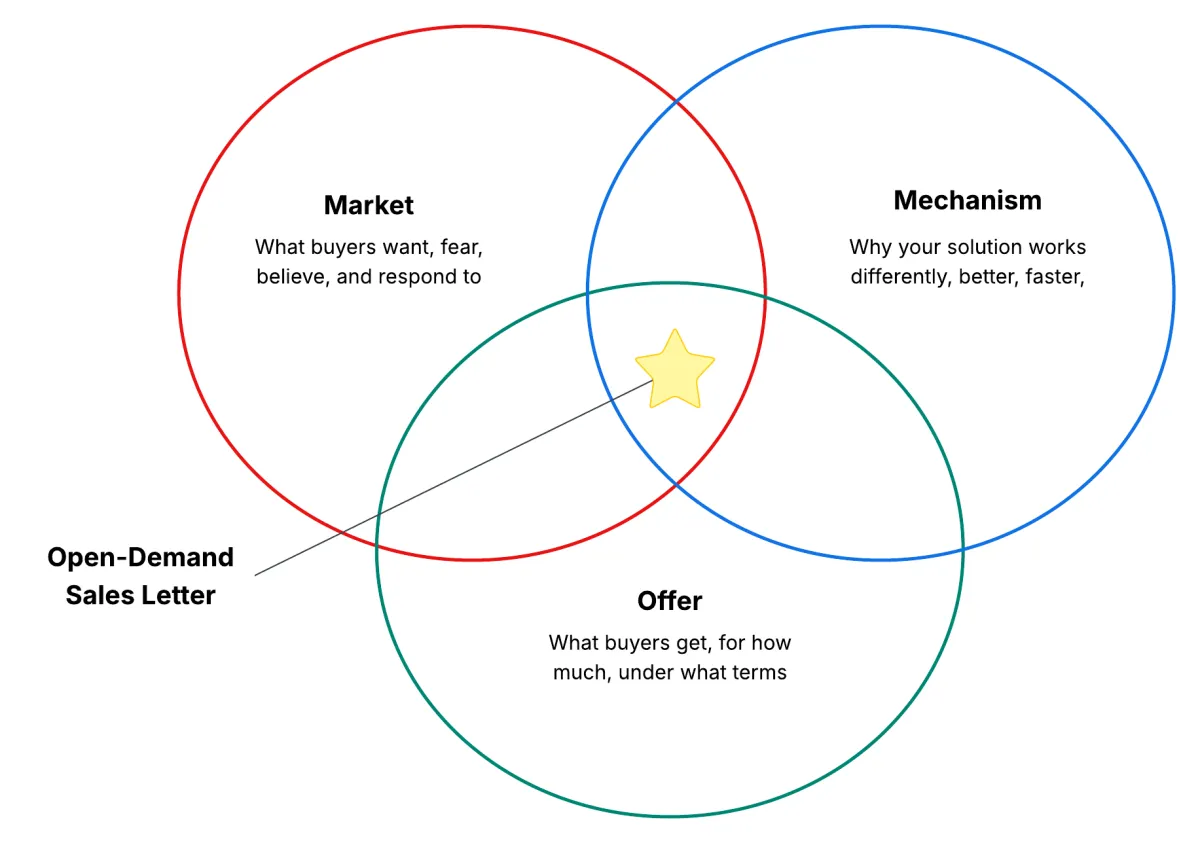
The ODSL sits at the intersection of the market, the mechanism, and the offer.
Building it is iterative, same as everything before it.
3A: Identification
Use what you learned on discovery calls to call out the audience, name their failures, confirm their suspicions, and relieve their fears.
Template:
This is for {niche} who {desire} but who {problem with lack of benefit/negative result}.
You suspect {insert suspicion}.
You love {insert thing they love}.
You hate {insert thing they hate}.
You tried {insert thing they failed at}.
You can't stop worrying about {insert fear}.
Be as specific as possible. The more specific you are, the better the conversion rate.
Keep in mind you're targeting the highest end of the market you can credibly serve.
You can look to social media to get a general sense of how the market is feeling – look for trends and topics inside the current narrative.
You'll be updating this section as you take more calls and move up-market toward the most profitable segment.
When you hit an edge case, only update the identification if the prospect actually buys.
3B: Trends & Stage-Setting
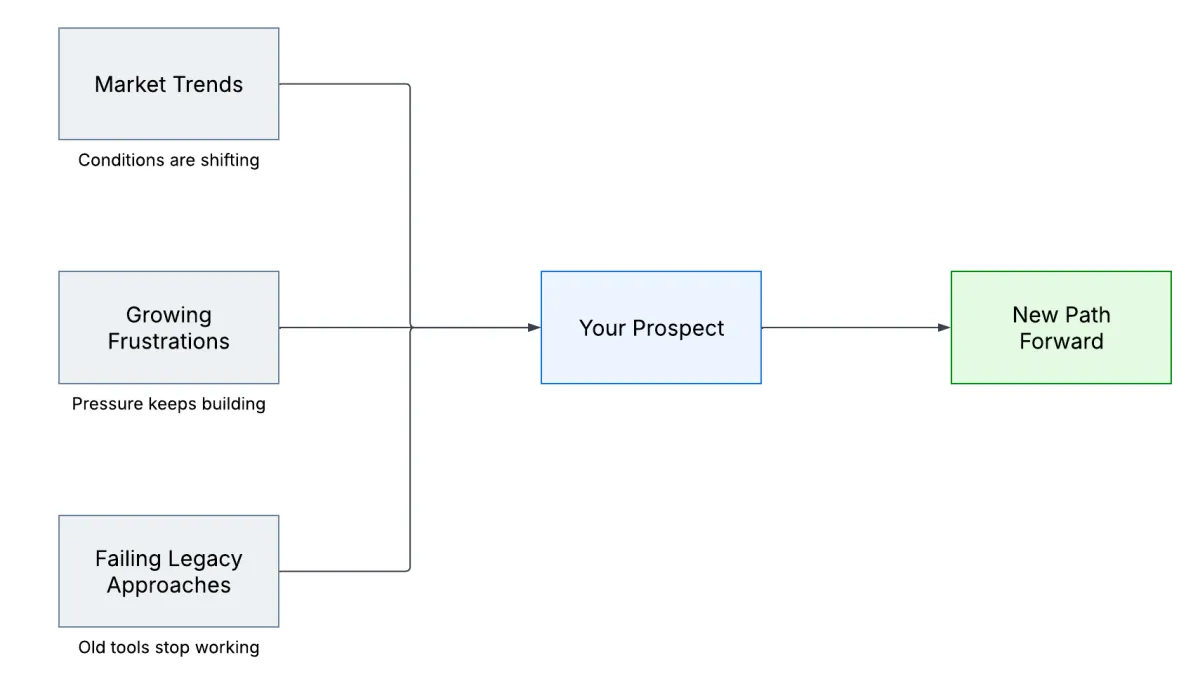
Now that you have the prospect's attention and have built rapport by identifying with them, set the stage.
Break down the problems and forces acting on them.
Use what you already gathered in the research step: what's actually driving this buyer's decisions, what they're frustrated with, what's shifting in their world right now.
List the trends that relate to your prospect.
For each one, expand on how it affects them and the forces that will keep applying pressure going forward.
Don't be afraid to draw your own conclusions.
A thoughtful interpretation builds real rapport while creating the pressure your solution resolves.
List the current tools or approaches the market is using and their limitations.
You're reshaping how the prospect sees their problem, how they evaluate their options, and adding real urgency — until only one path forward makes sense.
The rest of the sales letter is spent positioning your product as the mechanism that delivers that path.
3C: The Mechanism
Now that the problem and situation are framed, introduce the specific capability, technology, or approach that makes your promised result achievable.
Explain the reason this is possible now in a way it wasn't before.
Explain how this hasn't yet been properly applied to this specific situation.
Explain how this is the only place it's being applied this way.
Every strong offer exploits some existing or emerging capability in a new way.
Understanding that capability and how it applies to your buyer's exact situation is the work here.
How to determine the mechanism:
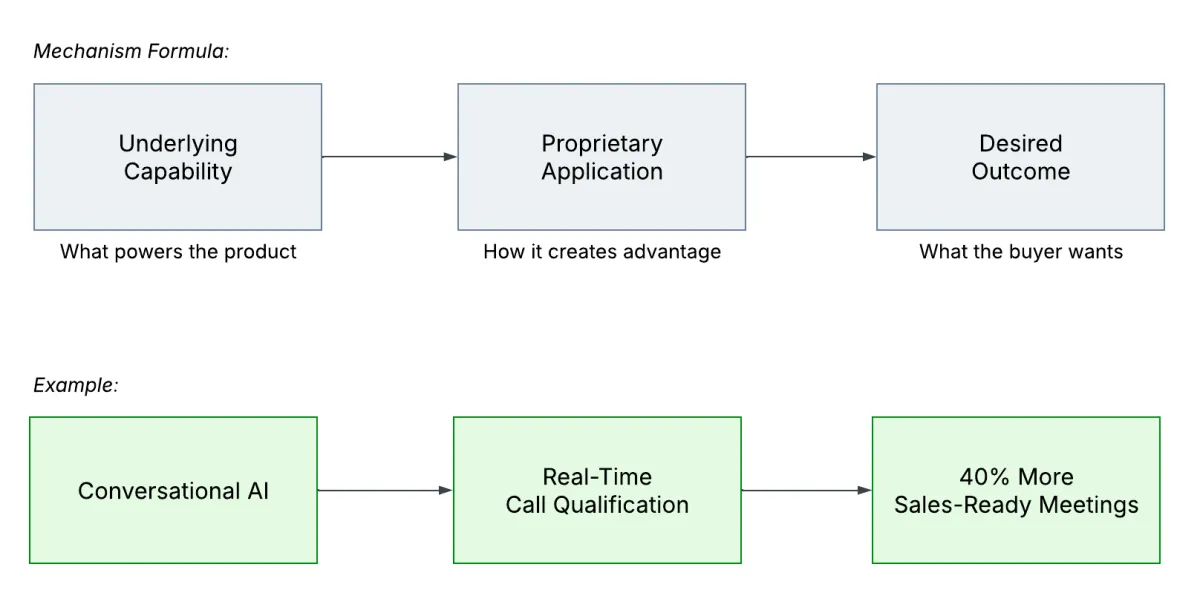
First, identify the underlying technology or capability you're applying to create an efficiency advantage.
Then explain how this capability hasn't yet been applied in its most productive way — because the method for applying it properly hasn't existed until now.
Then tie it back to how the underlying technology/capability + proprietary application produces the buyer’s desired outcome.
If you don't yet have a clear mechanism, you'll need to find one and apply it to your buyer's situation.
The customer wants the transformation – they don't care about the underlying mechanism for its own sake.
It's on you to understand it well enough to apply it productively.
This process is iterative.
You may start with the wrong mechanism for the market and land on the right one only through iteration — testing the letter, testing on calls.
As long as you stay in contact with the market, keep testing, and keep refining, you'll find the fit.
3D: Origin/Background
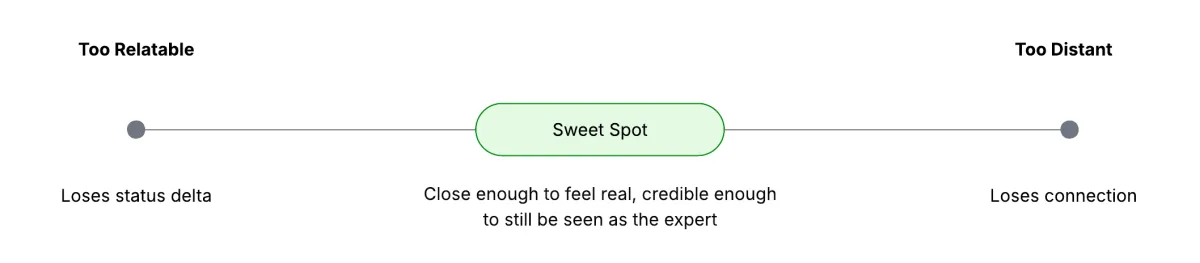
Establish how you're the one who actually built or discovered the mechanism.
Did you go through the same problem yourself?
Did you find this approach through your own work, or are you simply repeating something you read?
The story doesn't need to be long.
It just needs to make clear you genuinely went through the process, not that you're narrating someone else's.
For sophisticated buyers, shorter beats longer here.
State plainly that you built this, keep your status delta intact, and move on – don't over-explain or over-justify.
Map your story points out chronologically, then write and rewrite until it flows.
Don't come across as having a big ego – subtly brag.
Make it relatable enough that the prospect feels comfortable, but never so relatable that you lose your status delta.
3E: The Process
This is the most difficult part of the letter and requires the most time.
Map out the exact steps a buyer would need to take to reach the result promised in the headline, in detail, accounting for edge cases.
Without fully explaining how this works, the prospect won't buy into the mechanism, because they can't relate it to anything they'd actually have to do.
The goal is to outline every real step involved and position your product as the better, faster, cheaper way through it – once it's revealed.
This section's purpose is to make the sales letter as useful as possible.
Even a prospect who never buys should walk away feeling they got real value.
The more detailed the method, the more the prospect understands and buys into it.
The more edge cases you account for, the more trust you build.
Describe the method using a flowchart or diagram.
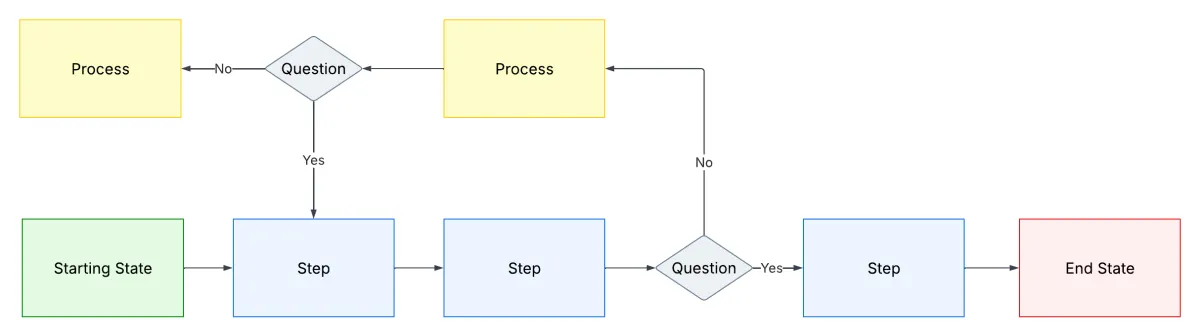
Each step represents a stage in the process; each decision point represents a branch — if this happens, do this; if that happens, do this instead.
For each step in the diagram, include:
– Why it matters: without doing this, {result}. If you do this, {better result}.
– A description of the activity, in enough detail that it's not obvious or vague.
– Real proof points where you have them.
– Visuals to illustrate, where useful.
– Answers to likely edge cases: "What if this happens instead?"
– Actionable advice they could use even without your product.
– A model or comparison, where relevant, contrasting the old way against a better way.
If a step in the process would normally involve your product, describe the underlying task or capability generically – do not name or introduce your product here.
This section is purely educational. The product gets introduced in the next section.
This shows you genuinely understand the problem and the mechanism, not just the sales pitch around it.
Done well, it also functions as a real roadmap for how the problem actually gets solved.
3F: Options
Now that the prospect has bought into the method and understands the mechanism, they're wondering how to actually apply it.
Lay out their real alternatives – usually doing it themselves, or using a competing approach.
State the real cost and time each alternative requires.
Be honest, but make sure the contrast is clear, so your solution stands out when it's introduced next.
Template:
You can do it alone or try alternative tools, however this results in {insert negative results}. Or you can {work with us/use the product}.
3G: Introduce Your Solution/Product
Introduce the product as the better, faster, cheaper way through the method you just walked them through, using the mechanism you already explained.
Take the slowest, most painful part of the manual process you just taught and put it directly next to what the product does in its place.
The bigger and more visceral that contrast, the harder this section works.
Keep the reader anchored in outcome, not features.
3H: Case Studies
Here you overwhelm the prospect with social proof to show that they are not the only ones to use the solution.
List out case studies with supporting details:
Before / After
Timeline
ROI
Description of what was done
Quote
Every element of the letter either strengthens belief or weakens it.
The objective is to invest in the signals that return more than they cost.
Every market trusts different signals.
Identify which signals your buyers already respond to, then reinforce them throughout the sales letter.
3I: Benefits and ROI
State how much money they save, make, time they save, energy they save.
You derived this from your case studies and your method.
This can be determined by comparing the steps in the following section to the steps in the method in the process section.
Outline the benefits:
“You will be able to do ____”
“You can forget about ____”
“Instead of doing {activity}, you can do {new activity)”
Back up your benefits with an ROI justification.
The benefits are the inverse of the problems stated in the identification section and trends.
Include indirect benefits: second and third order consequences of using the solution.
Typically you write the How It Works Section First, and then you update the benefits.
As you are taking calls and testing benefits, you are updating this section.
3J: How It Works/Action Plan
Now that prospects understand the method, the solution, and the benefits, they are wondering how it actually works.
At this point we walk through the jobs that need to be done in chronological order using the feature set.
Template:
First, we use {feature} to do the {job}[X times faster/better/cheaper] this is valued at {insert the cost/time savings or benefit}. Instead of doing it {this way}, we use this feature to do it {that way}.
Next, we use {feature to do {job}, this is valued at {insert the cost/time savings or benefit}. Instead of doing it {this way}, we use this feature to do it {that way}.
Next, we use {feature to do {job} which makes the process {better/faster/cheaper in some way} this is valued at {insert the cost/time savings or benefit}. Instead of doing it {this way}, we use this feature to do it {that way}.
The features relate to the jobs done in the method.
The features enable better, faster, cheaper movement through the protocol.
Don’t go into too much detail of the features. They don’t matter if they don’t relate to a job to be done.
Keep how it works chronological.
The prospect is already familiar with the process, and now you are going through the process in a better/faster/cheaper way.
Compare the way from the method to the way used from HOW IT WORKS:
To determine the efficiency gain, you can use an expected value formula.
This serves as the ROI justification later in the sales process:
Expected Value = Expected Gain − Expected Cost
Expected Gain = (New Revenue × Likelihood You Actually Capture It) + (Time/Cost Saved × Likelihood You Actually Realize It) + (Risk Reduced × Likelihood That Risk Was Real)
Expected Cost = (Price × Certainty You Pay It) + (Implementation Time × Likelihood It Runs Long) + (Internal Resources Diverted × Likelihood They're Actually Needed) + (Opportunity Cost × Likelihood You'd Have Used That Time/Budget Elsewhere)
3K: The Offer & CTA
Now that the prospect understands the process, and the product/solution, how it works, and how valuable it is, you need to sum up the value, then relate to the price you are actually charging, then give an irresistible offer.
Stack up the features.
Template:
So here’s exactly what you get:
You get {feature} valued at {price} since it saves/makes you {amount} by {method}.
You {feature} valued at {price} since it saves/makes you {amount} by {method}.
You {feature} valued at {price} since it saves/makes you {amount} by {method}.
All together, that’s a {amount} value.
Instead of charging that amount, we charge only {price}.
And right now because {insert reason}, we are offering the first {number of people} an extra {feature} valued at {amount}.
We also offer a {introduce guarantee}, so if for {any reason} you are not satisfied within {timeframe}, you get 100% of your money back.
Click the link and sign up.
Not including the price/offer in the marketing letter:
For high-ticket offers, you will not include the offer and pricing in the public letter.
You'll include it in the sales letter that you will send to your prospect one-on-one.
If you choose to not include the price/offer, then simply route the prospect to a call to action: either “Book A Call” that routes to a calendar page or “Get A Price” that routes to a quiz.
3L: Q&A (Objection-Handling)
Not all buyers are the same, so you will need to account for edge cases within the q and a section.
Make a list of questions as they come up on the sales calls or through chat and answer them within this section.
Include a call to action after the rebuttal.
General questions to include:
"I don't think this is for me because of my situation."
"This isn't the right time."
"This isn't the right price for me."
"I don't make decisions this quickly."
"I need to check with my partner/team."
"Who else in my industry is using this?"
"How do I know you'll still be around long-term?"
As new objections come up, keep adding them here – over time, the sales letter starts answering questions before they're ever asked.
That's the full structure. Work through it until it's tight and ready to test.
This is the first draft of the Open-Demand Sales Letter that you'll run real traffic to, so it has to hold up on its own.
Step 4: Validate Sales
Once the Open-Demand Sales Letter is finished, we must validate that the ODSL actually closes sales.
At this point, you should still have demos coming in through the direct outreach or small paid test you started in step 2.
Read through the sales letter on the calls to determine if the prospects understand the mechanism and the offer.
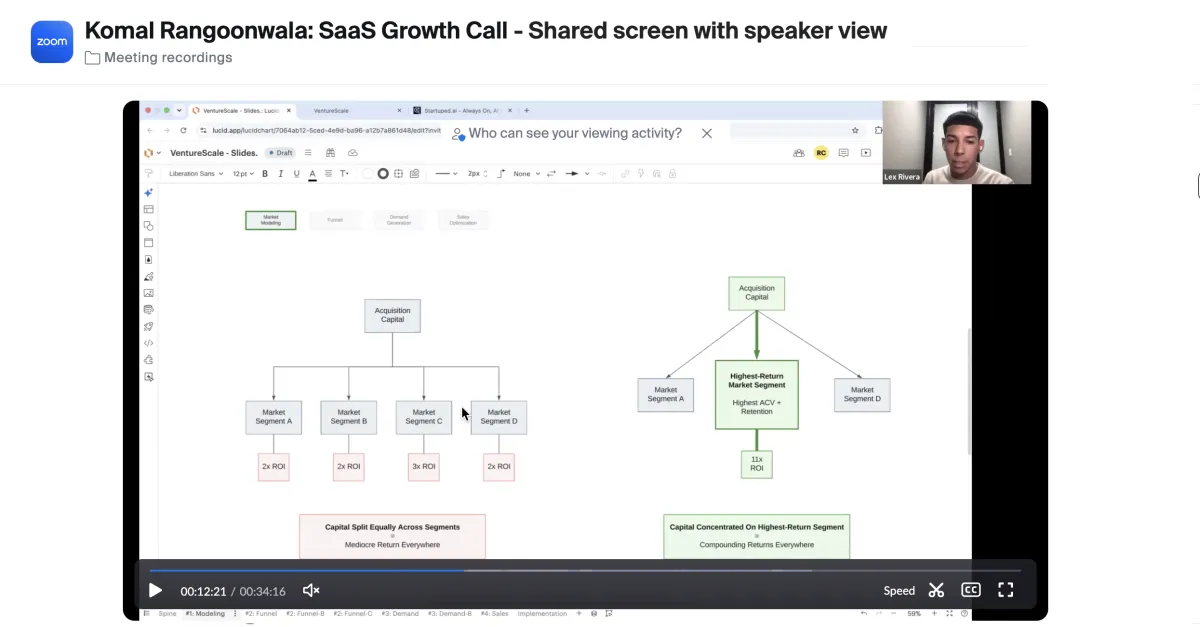
Validate that you are closing at a greater than a 2% lead-to-close rate.
Meaning more than 2% of all leads who receive your ODSL end up closing.
If a prospect disagrees with a step in the method – update the method.
If a new situation surfaces – update the identification.
If a new trend surfaces – update the trends section.
If they don't buy into the mechanism – strengthen the proof or rework the mechanism until they do.
If price is the issue – hold the line on the offer but confirm the machine is still profitable before adjusting anything.
If there's no price resistance at all – the price is too low.
Raise it in steps until roughly 10% of prospects push back, which is the market showing you its ceiling.
If there's real resistance, or the conversations are about nickels and dimes – that's a signal to re-run the process at a higher point in the market rather than discount your way through it.
Step 5: Create The ODSL Video
Once we validate that the Open-Demand Sales Letter can effectively close deals, we record its video format (the ODSL Video).
The ODSL Video is then used as the primary ad (covered in the next step), while simultaneously linked inside of the Open-Demand Sales Letter itself.
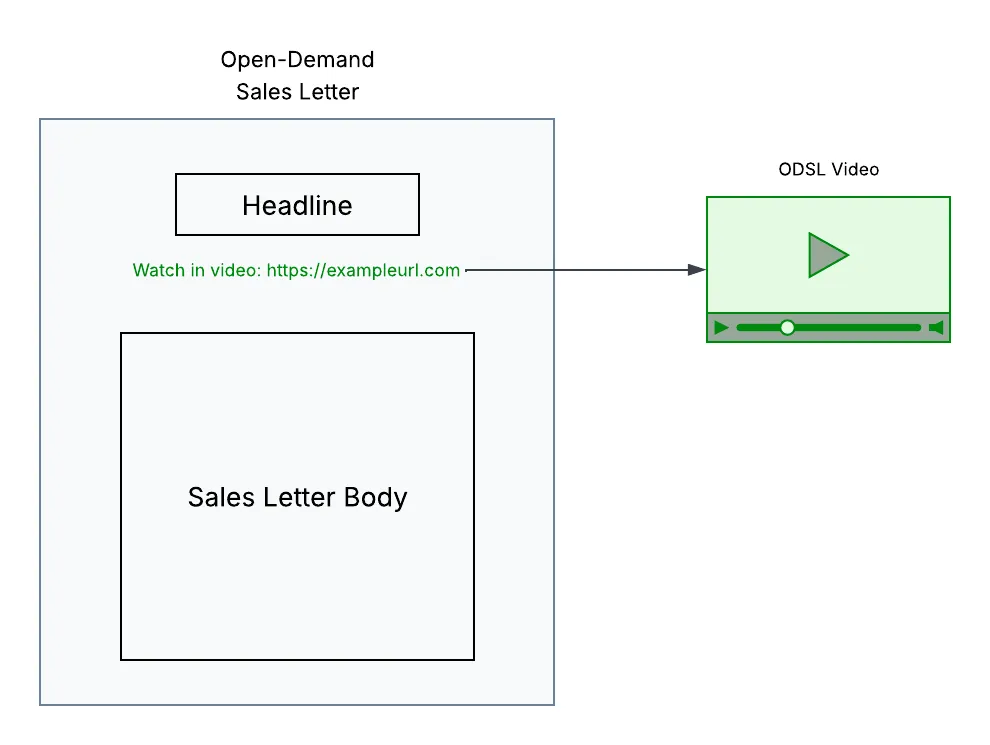
Recording The ODSL Video
Authenticity matters more than production value at this stage.
A raw, honest recording built on sound concepts will outperform a highly produced one built on weak concepts.
Once the message is proven to convert, production quality can be increased – not before.
The simplest way to record the ODSL Video is to record a screen-share video as you go through the entire Open-Demand Sales Letter.
Step 6: Launch Paid Ads (Full Budget)
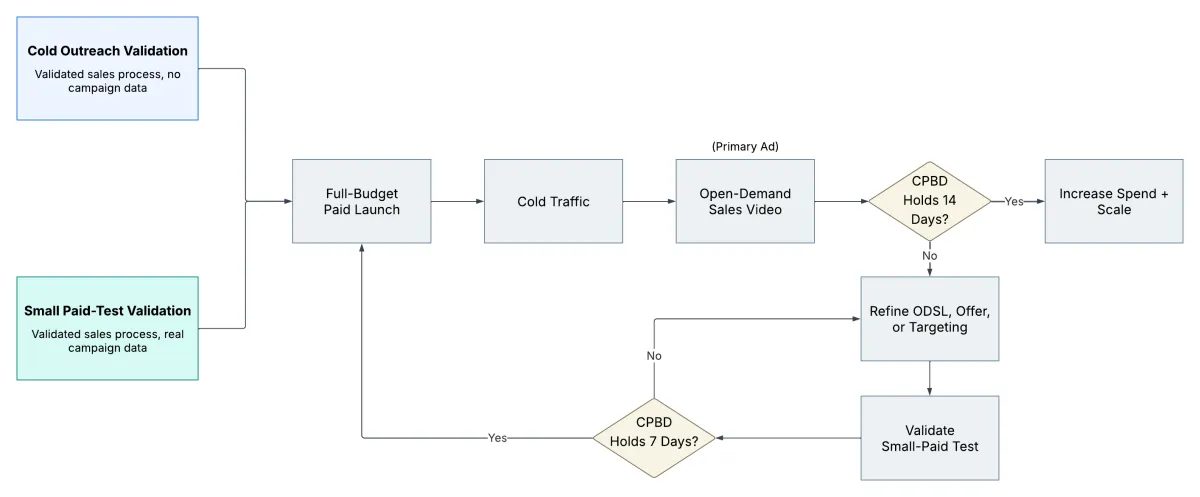
If you validated through cold outreach in Step 2, this is where paid advertising actually begins.
If you validated through a small paid test in Step 2, this step isn't a new beginning for you, it's acceleration.
You paid for that head start by putting real capital behind the test earlier – this is where it pays you back.
Either way, from here the process is the same.
Push cold traffic to confirm the sales letter/video holds traction outside the initial test audience.
Funnel Structure
The primary ad going out at this stage is the ODSL Video (video-version of the sales letter), exactly as is.
Then we drive traffic to the booking page which contains the same ODSL Video and a calendar embedded right below it.
Tracking Performance
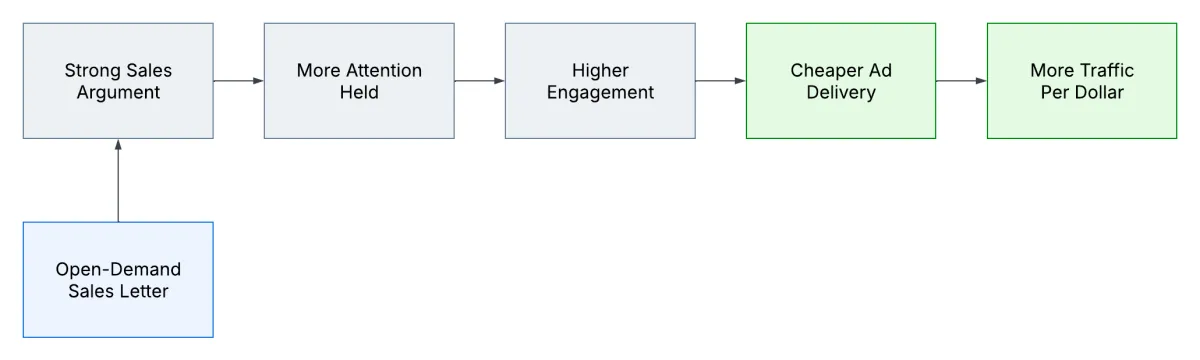
Watch engagement closely. If the sales argument is genuinely strong, it earns cheaper delivery because the platforms reward content that holds attention.
Watch cost-per-booked-call here, not CAC. At this point, you don't have enough closed deals yet to trust CAC.
Once Cost-per-Booked-Demo (CPBD) is holding at least 3x under your break-even number, consistently, for at least two weeks of real spend, that's the signal to move into scaling it.
Break-even = close rate × average deal size × margin after delivery costs
If it doesn’t hold, pull back spend.
Fix the ODSL, the offer, or the targeting (using the same feedback signals from Step 5).
Then re-test with a small paid-test and validate performance for 7 days before increasing to full budget again.
Step 7: Increase Ad Spend
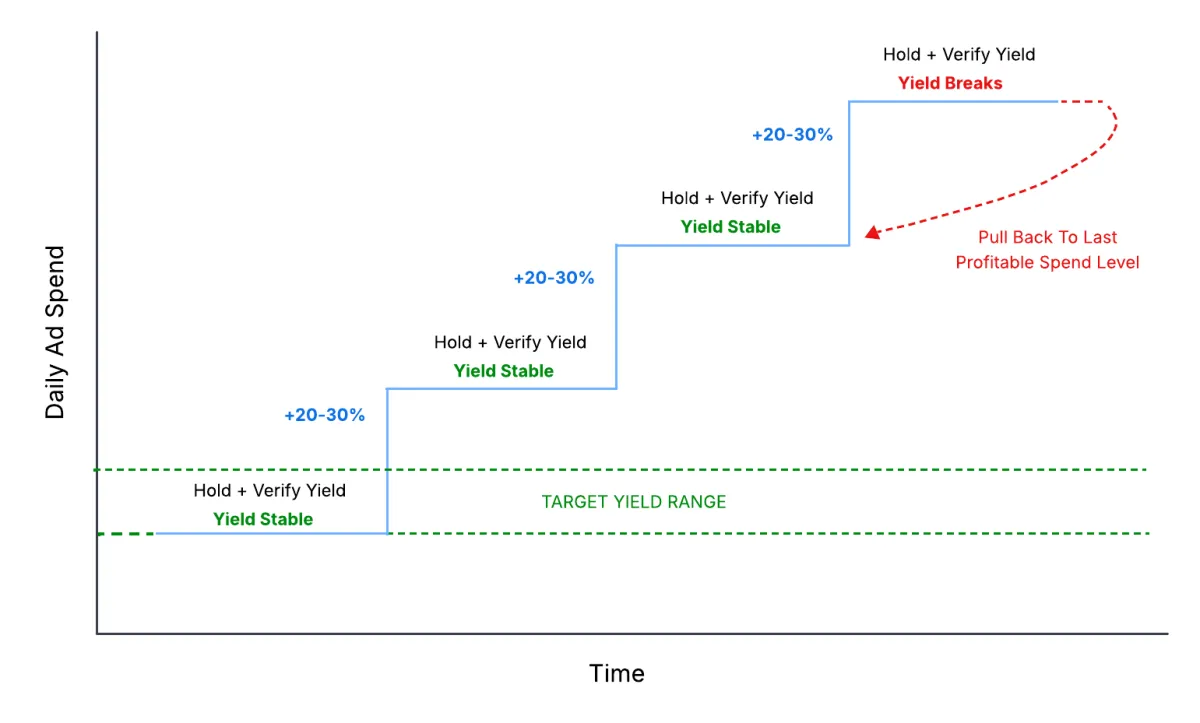
Once Step 6 has proven the Open-Demand Sales Video is converting and the ad account is holding steady, increase ad spend in controlled steps.
Watch the yield the whole way, and pull back the moment it starts to break rather than after it's already broken.
A standard pace: increase spend in increments of 20-30% every few days, holding at each level long enough to confirm the yield is actually stable before pushing further.
Secondary Ads
Next, we build out the secondary ads.
These are short video or static image ads cut from the same proven Open-Dynamic Sales Letter – different angles and openings.
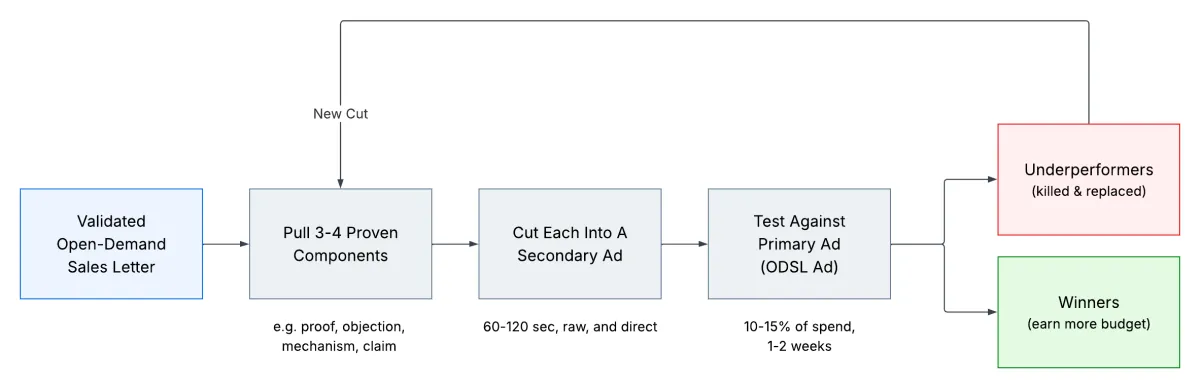
We go back to the Open-Demand Sales Letter itself and pull out three or four distinct components.
Then we use a specific proof point, the strongest objection-and-answer, the core mechanism explained on its own, a single sharp claim from the identification section.
Each one becomes its own ad, 60 to 120 seconds (or a static image), recorded the same way the primary was: raw and direct, no heavy production.
We launch them at a small fraction of the primary's budget, 10-15% of total spend split across all of them combined.
Then we watch performance for one to two weeks and kill anything underperforming the primary's cost-per-booked-call, and we let winners earn a larger share of that secondary budget.
We refresh the weakest performer with a new cut from the sales letter every week or couple of weeks, depending on ad spend, so the account always has something fresh in rotation.
This gives the algorithm new material to run without diluting the core argument, since every cut still traces back to the same proven sales letter.
Step 8: Refine & Scale The Sales System
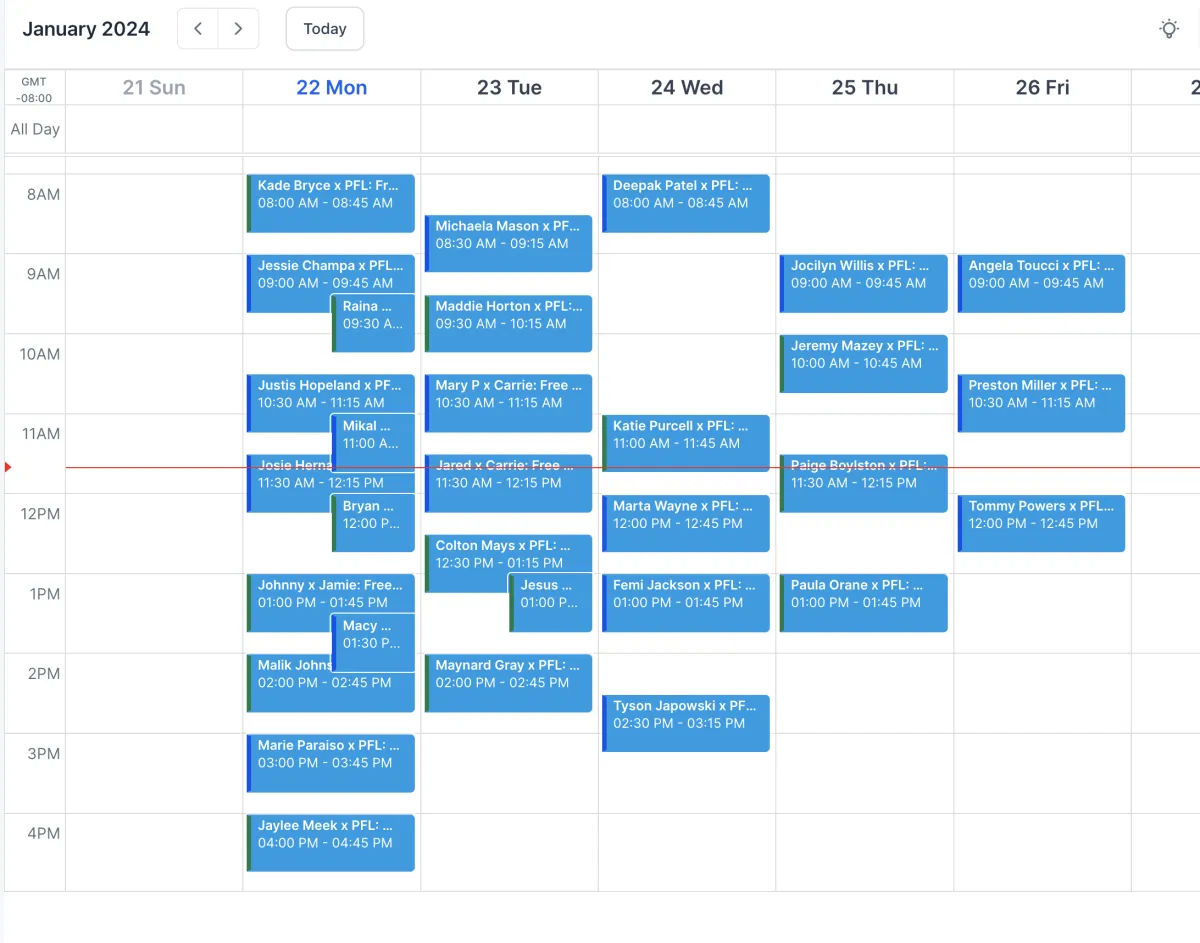
As the spend increases from Step 7 fills your calendar, this is where the sales team scales to match it.
Hiring The First Rep
Bring on your first rep once bookings consistently exceed what you alone can take.
A simple trigger: once you're personally turning down or delaying calls due to your own schedule, that's the signal.
Use the Open-Demand Sales Letter itself as the primary asset that you train your rep with.
The objections, the language, the close: all of it already tested, already working, before the rep ever takes a call.
When To Add The Next Rep
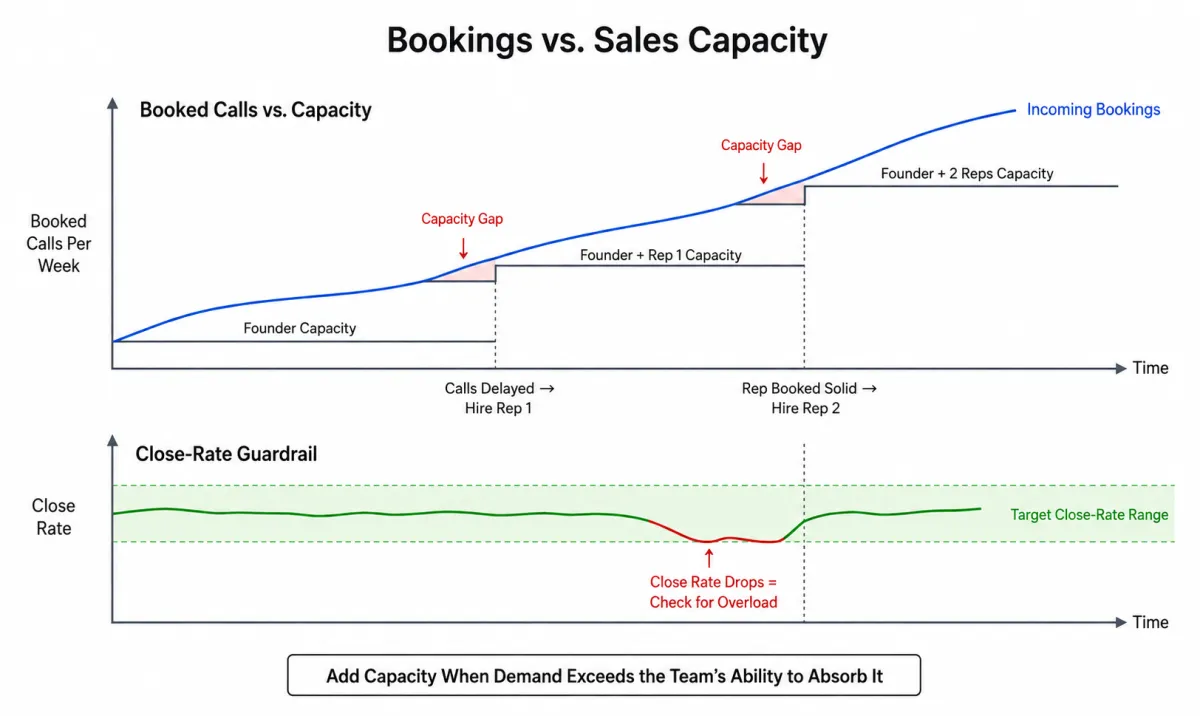
Don't hire on a fixed schedule – hire against a real signal.
Track 2 numbers per rep:
1.) Booked calls per week they can actually take
2.) Their close rate on those calls
When a rep is consistently at capacity — booked solid, no meaningful gaps — and close rate is holding steady rather than dropping from overload — that's your trigger to add the next rep.
If close rate starts slipping as a rep's calendar fills – check if the issue is rep overload before you assume anything else.
If capacity is the actual cause, you're already a hire behind.
The Optimization Loop
This is what keeps the Open-Demand Sales Letter and the entire sales process in its sharpest form at all times, as volume grows:
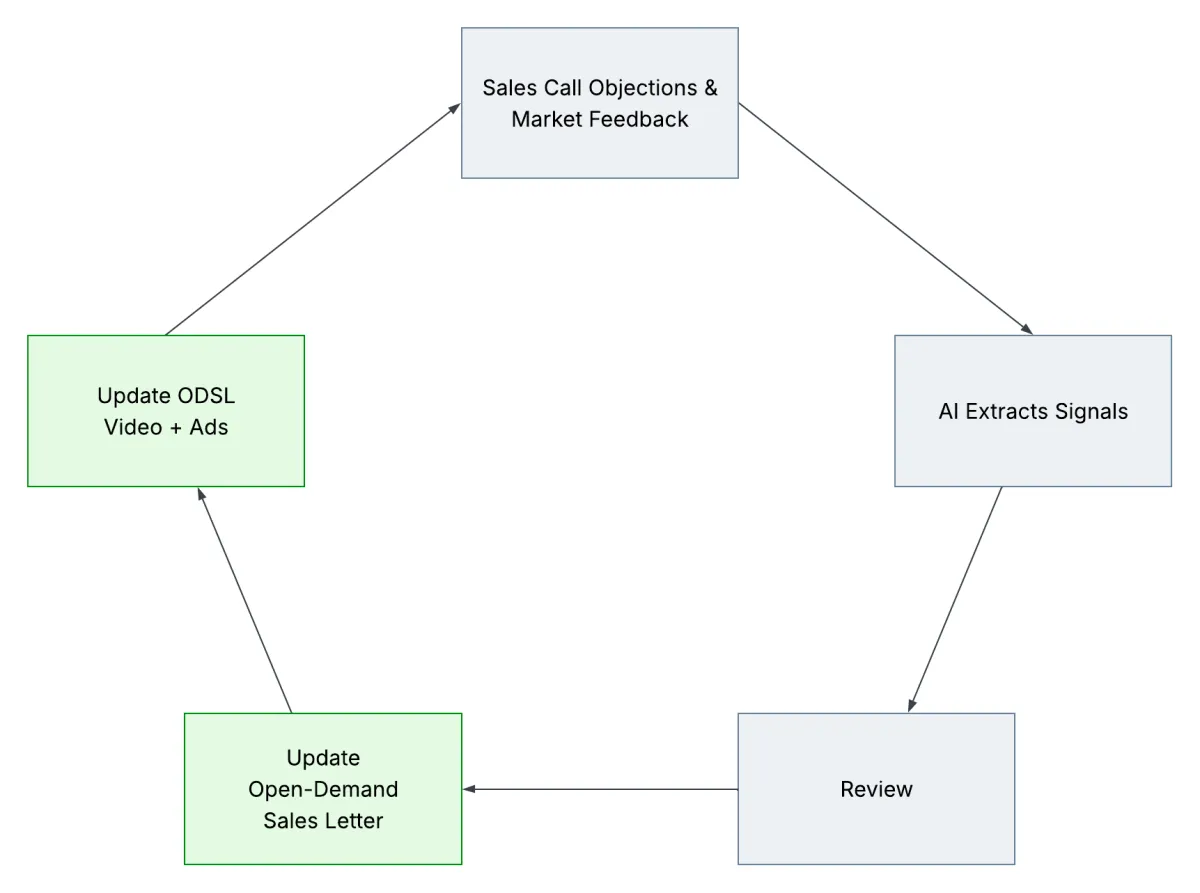
Record every demo and then run the call transcripts through an AI model on a weekly basis and extract 2 core signals:
1.) Every objection. The exact phrase. Whether the rep's answer resolved it or the prospect went quiet.
2.) Every unprompted phrase a prospect uses to describe their own problem. Verbatim.
Flag anything that appears in more than one call.
One call is an anecdote. Three is a pattern. We act on patterns.
Update the written Open-Demand Sales Letter every cycle.
As the sales letter keeps sharpening, the sales motion itself begins to simplify.
Fewer live calls will be needed to close deals since most of the selling is handled through written word, video, or chat (since the ODSL is doing most of the selling before a rep ever gets involved).
Process Summary
When this entire process is done correctly, growth isn't slow. It isn't lucky. It isn't rare.
It's explosive, it's predictable, and it's proven – $10 to $15 in new ARR for every $1 spent.
Here's the proof:
Open-Demand Sales Letter, Applied Across Markets
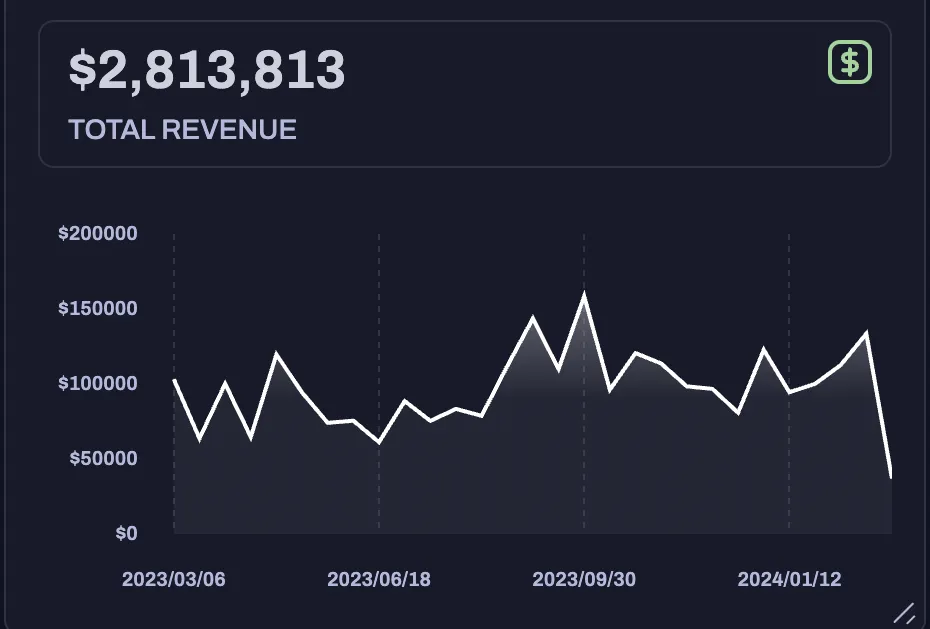
InvestorCreator — EdTech · Real Estate Investing
ARR Before: $750K
ARR After: $2.8M
Ad Spend: $271.5K
Return: 10.3x
Timeframe: 15 Months
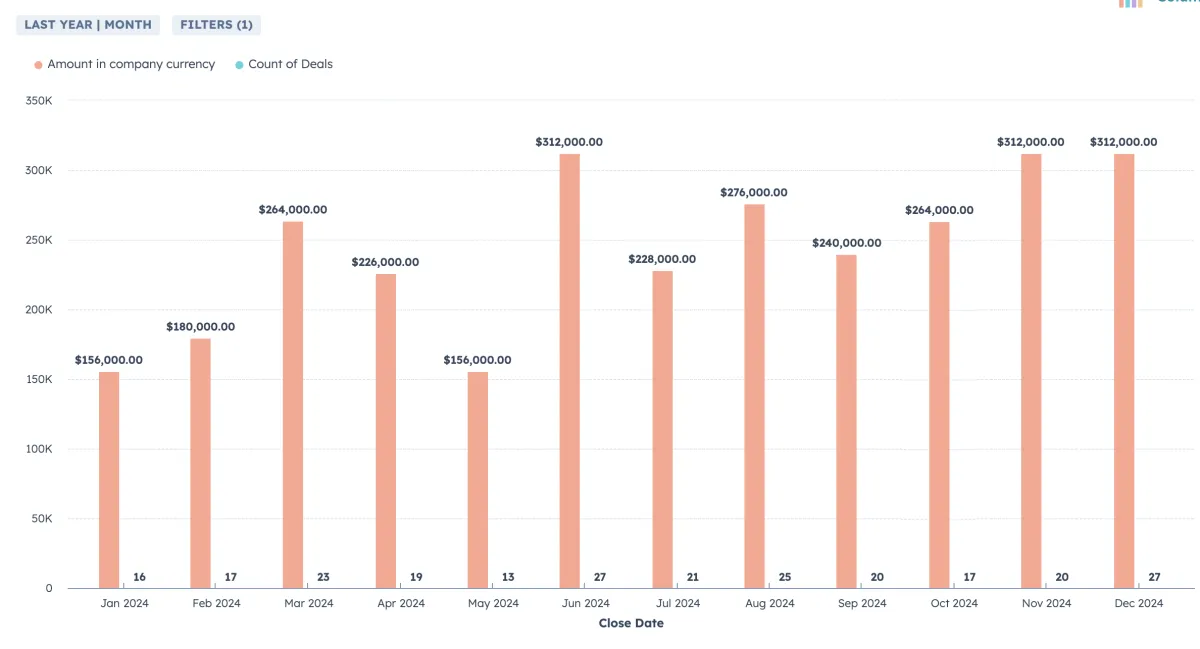
AllinOneMarketing — Marketing Automation/CRM
ARR Before: $400K
ARR After: $1.4M
Ad Spend: $123.9K
Return: 11.2x
Timeframe: 12 Months
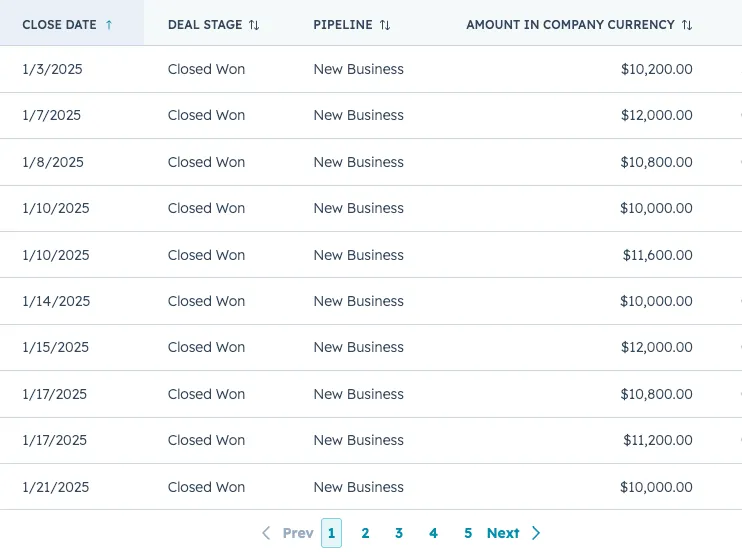
YouEarn — AI Sales Enablement
ARR Before: $205K
ARR After: $970K
Ad Spend: $78.6K
Return: 12.3x
Timeframe: 9 Months
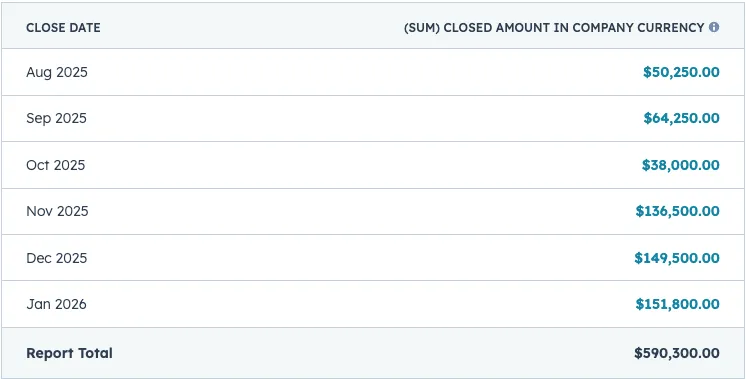
SalesLinq — AI Revenue Intelligence
ARR Before: $0
ARR After: $590K
Ad Spend: $46.9K
Return: 12.5x
Timeframe: 7 Months
Straight Line To ARR Growth
At this point, you've seen the entire model, start to finish:
The claim testing, the Open-Demand Sales Letter, the ODSL Video, the ad strategy, the scaling discipline, and the optimization loop that keeps it all in its sharpest form.
Now the real question is what do you actually do with it.
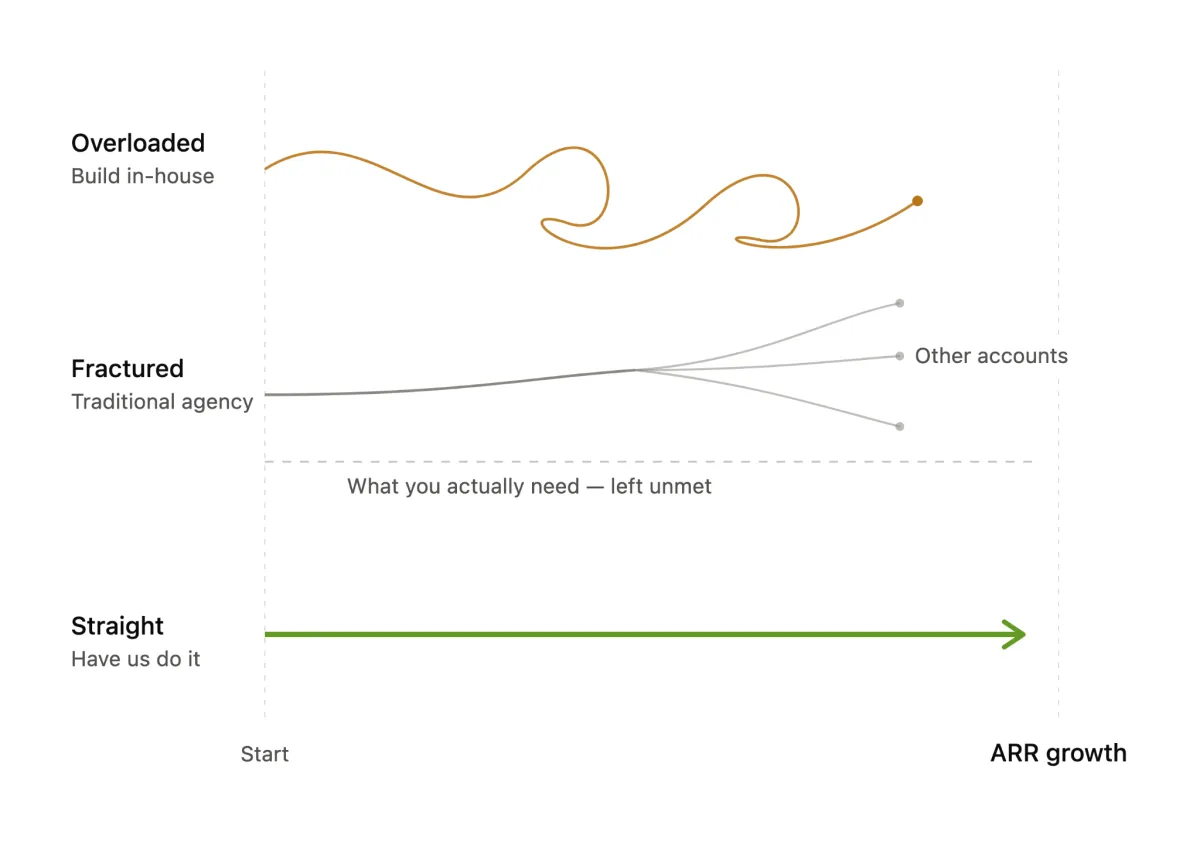
Overloaded – Build This In-House
Nobody in-house has built an Open-Demand Sales Letter.
It's not a skill you can hire for.
We built it from the inside, account-after-account over the past 8+ years of learning what converts.
Even setting that aside, consider what it actually demands:
You need to run the claim-testing and validation loop.
You need to build the Open-Demand Sales Letter.
You need to iterate and validate it as real data comes in.
You need to record and edit the Open-Demand Sales Letter Video.
You need to manage the ad account or outbound.
You need to create and test secondary ads.
You need to run the sales calls yourself.
You need to refine the sales process as you go.
You need to hire, ramp, and train a sales team against a pitch you're simultaneously still rewriting.
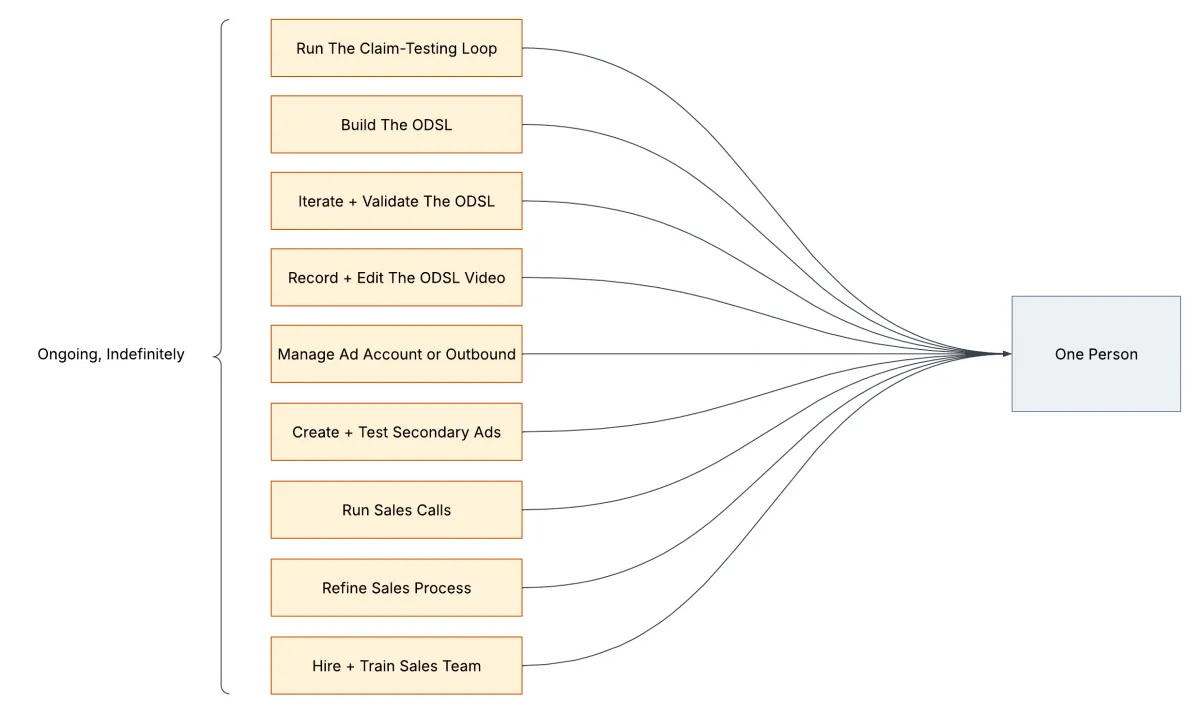
And it never stops.
The moment any of this stalls, the Open-Demand Sales Letter starts going stale, and the whole advantage erodes with it.
That's not one skill. It's nine, stacked, running at once, converging on one person – you, a co-founder, or whoever you hired to run this.
Fractured – Hire A Traditional Agency Or Consultant
Marketing agencies write ads and hand you leads; what happens on the call is your problem.
Sales consultants train your team on a pitch they had no part in creating, disconnected from whatever the ads are actually saying.
You end up stitching two vendors together yourself, hoping their two half-solutions accidentally agree with each other. But, they rarely do.
And this is the part that actually matters most when it comes to traditional agencies or consultants: their incentives are not aligned with your growth.
A typical agency or consultant gets paid whether or not you get results.
That's not a moral failing, it's just the business model – retainer in, deliverables out, your ARR is not their problem.
So their real incentive is signing the next client, not obsessing over your funnel until it actually converts.
Straight – Have Us Do It For You
You stay focused on the business. We handle everything else for you.
Marketing and sales stop being two separate departments. One team runs the whole thing — top to bottom, ad to close.
And we don't get paid unless you win.
Performance-based, guaranteed results – if your growth doesn't move, neither does our revenue.
Which is also why we only partner with a few SaaS companies at a time.
A guarantee like ours doesn't survive if our time and attention are split across 40+ accounts.
Partnering With Us
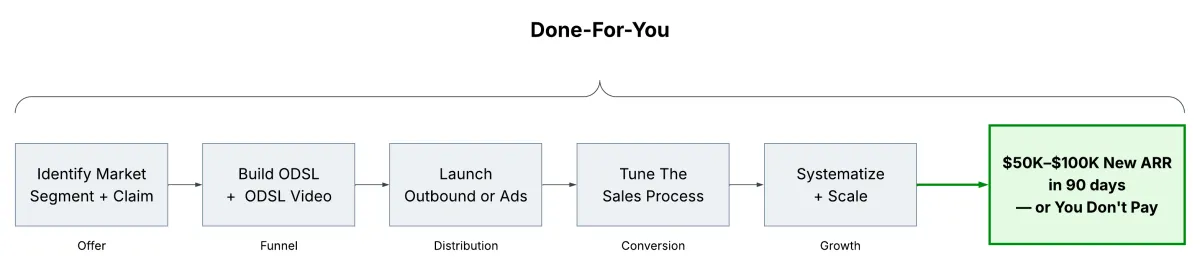
Our Guarantee: We’ll Add 50k-100k To Your ARR In 90 Days — Or You Don’t Pay.
First, we identify the most profitable segment of your market and build the claim that cuts through the noise and pulls in your highest-value accounts.
Then we build your Open-Demand Sales Letter + ODSL Video and the funnel it runs through.
Then we launch outbound or paid ads, depending on your budget and where your buyers actually are (so you're generating real pipeline within days, not quarters),
Then we tune the call script, the pre-call workflow, the follow-up process, and the entire sales process (so your pipeline converts into predictable ARR growth),
And then we systematize the entire thing and scale it – Increasing spend and volume in controlled steps and updating the sales letter every week (so you scale without ever sacrificing performance or margin).
Everything is completely Done-For-You.
Next Steps
You've seen the system. You've seen what it produces. You've seen the guarantee behind it.
The only thing left is finding out if it's a fit, for your market, your numbers, and what an Open-Demand Sales Letter would actually do for your business.
We don't get paid to sell you. We get paid to deliver.
So there's no pitch on this call, just an honest read on whether we can produce results for you.
Book a call below.
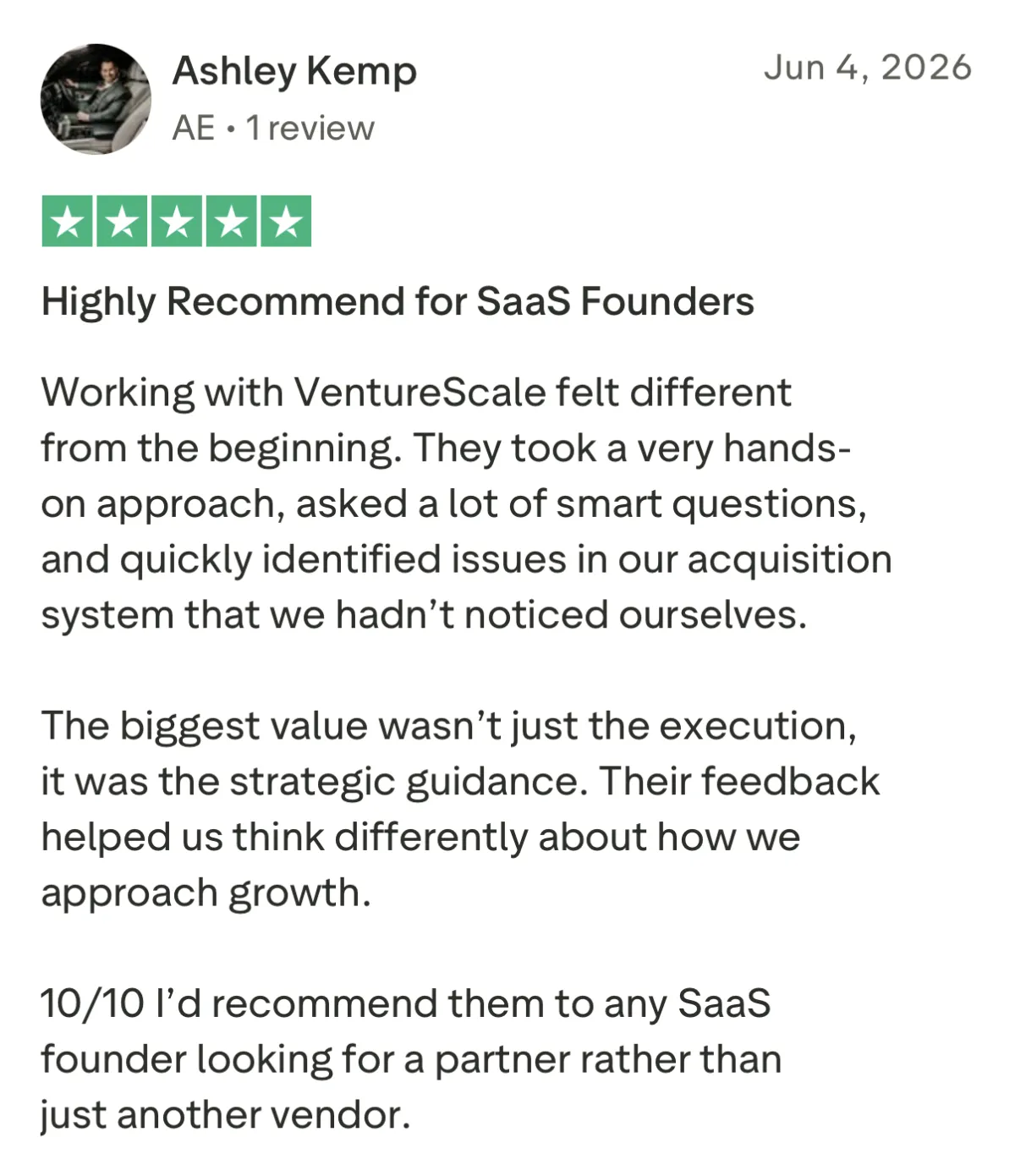
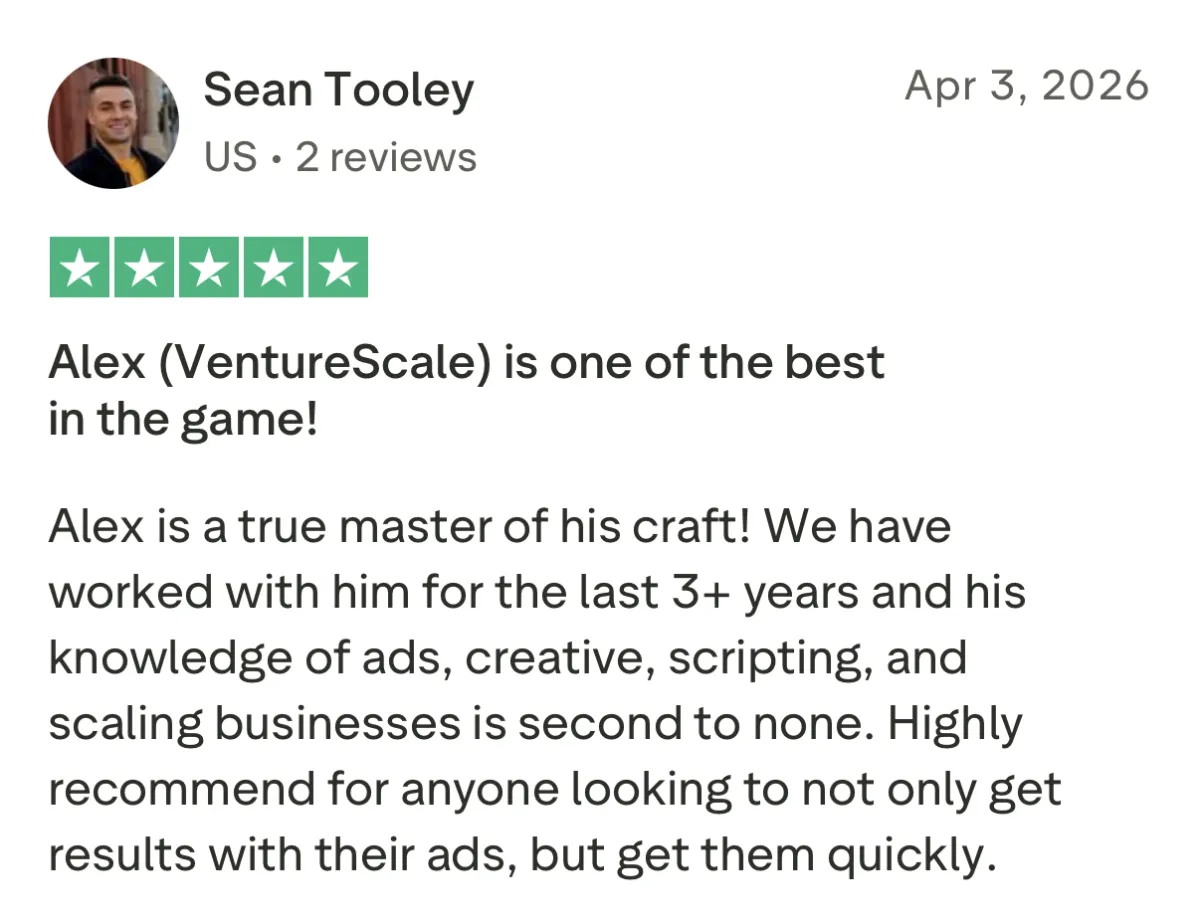
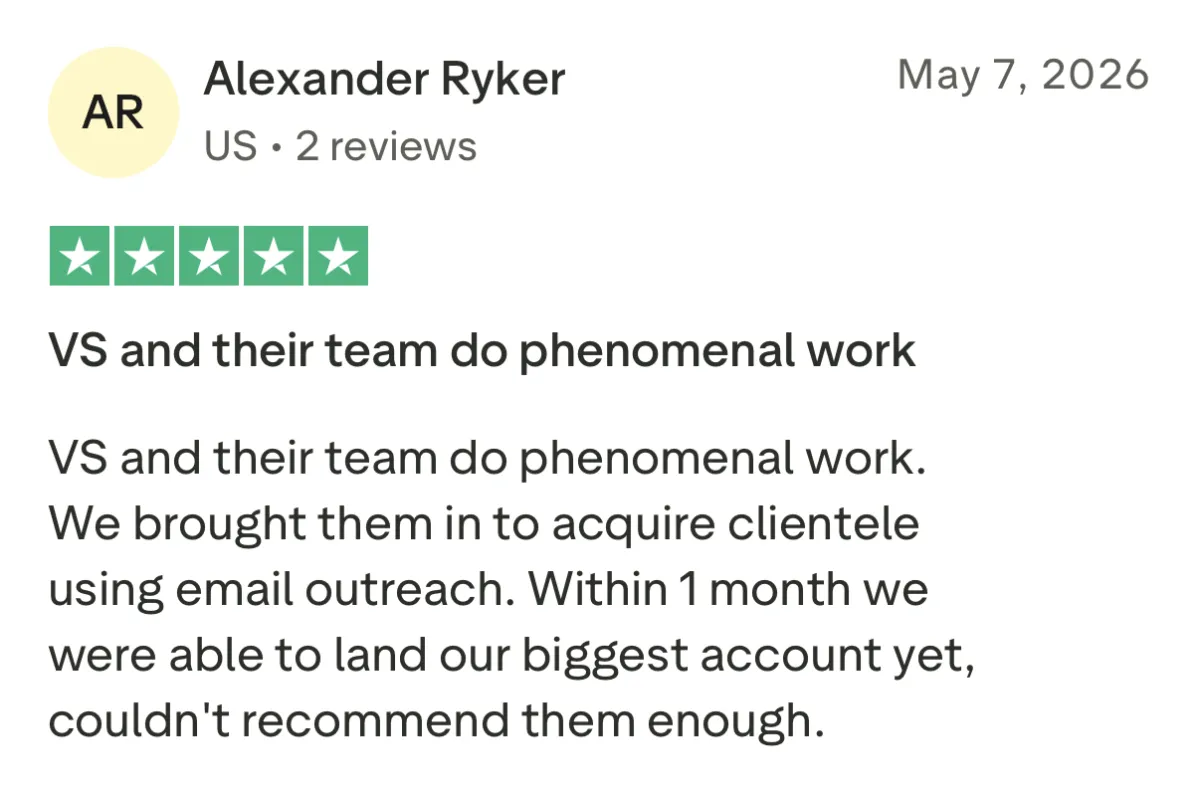
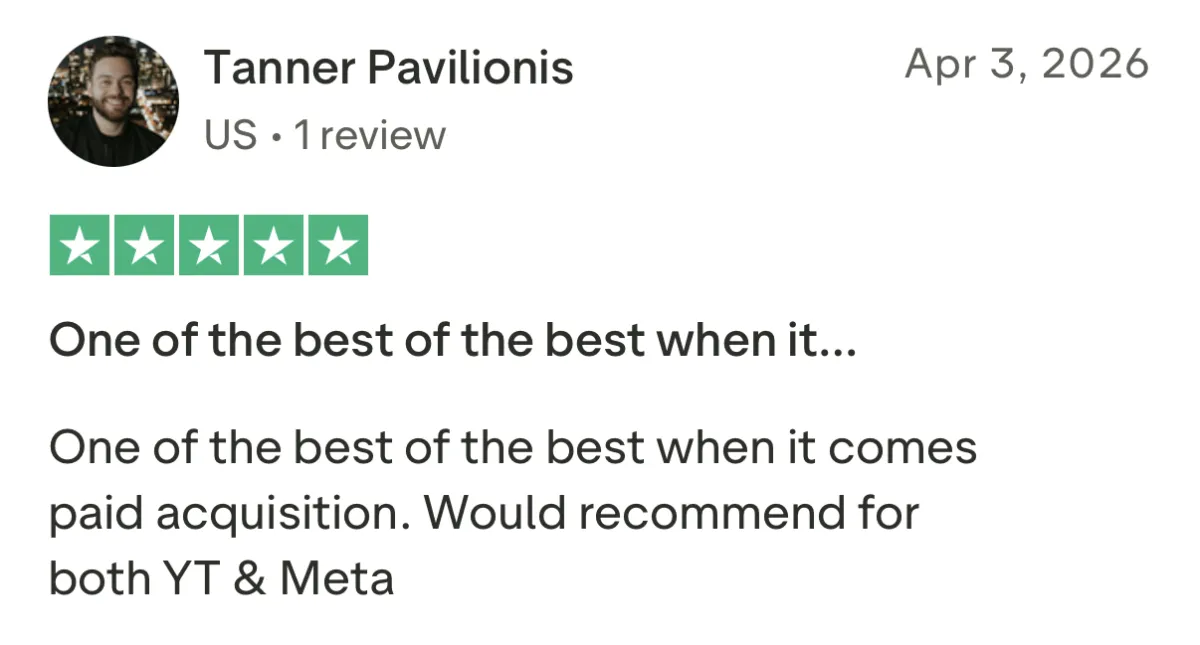
Recent Reviews
Questions
How Fast Do You Launch, And How Soon Will I See Results?
Your ODSL system is built within 7–10 days of onboarding.
From there we launch, outbound or paid ads, depending on your budget and where your buyers actually are.
Most accounts are live within 14–30 days of onboarding.
The range depends on two things: your budget, and how fast your team can move on the pieces that need you (approvals, access, the handful of inputs only you can provide).
The accounts that launch fastest are the ones that clear those quickly on their side.
As for results, the guarantee window is within 90 days of launch. That's the timeframe we hold ourselves to for adding $50K–$100K in new ARR, and everything from day one is built to hit it.
What Am I Responsible For vs. What Do You Handle?
We need access to the relevant accounts, your CRM, your data, and your sales calls, plus timely feedback and any information we ask for along the way. That's it.
Everything else, the strategy, the build, the launch, the optimization, the ongoing loop, is on us.
The one place you have a choice: the ODSL Video and the ads. Having you or someone in-house on camera works best, buyers respond to a real face from the company.
But if nobody on your team is comfortable on camera, we can handle that side for you too.
Either way, it gets done.
What If I'm Already Running Ads or Cold Outbound?
If you've already got campaigns running, you've generated something valuable: real data on what your market responds to, and real evidence of where it breaks down.
We don't tear all of that out and start from zero. We audit what's live, keep what's working, and rebuild everything else around the ODSL so the whole system finally points in one direction.
Most existing setups underperform for the same reason: the ads, the messaging, and the sales conversation were each built separately, so they're not saying the same thing.
That's the exact gap the ODSL is built to close.
If you're already spending on channels that aren't converting the way they should, you're not starting over with us, you're fixing the disconnect that was capping your results in the first place.
